Housing cooperatives began with the idealistic goal of giving residents control over their own homes. They were voluntary organisations that focused on rehabilitating run-down terraces (and, later, building new estates) with the aid of loans and government grants.
Decision-making was in the hands of co-op members rather than the council or private landlords, but the members often had no previous experience working with architects and other professionals – which led to them making some surprising choices.
This is the second in a series of four articles on housing by Matt Thompson:
.
- From slum clearance to rehabilitation
- Grassroots initiatives
- Liberal compromises
- Militant and ‘bourgeois’ housing
.
.
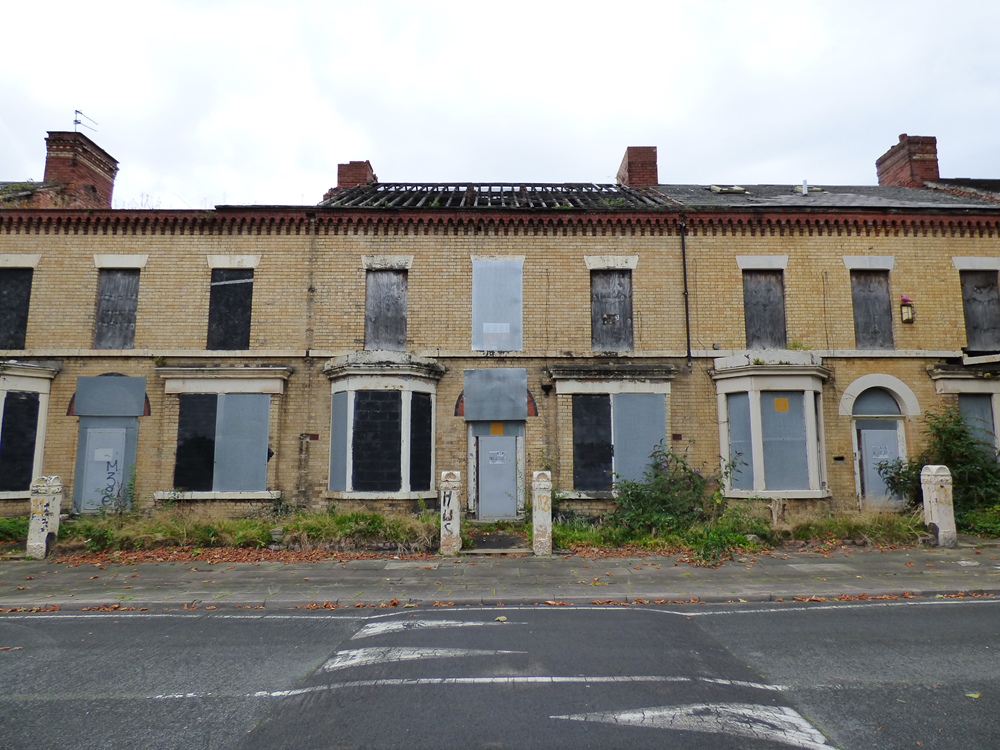
In 1972 a small group of architects and housing professionals founded the Granby Street Housing Co-operative and approached the council for a mortgage to acquire and rehabilitate terraced houses. Shortly afterwards, with encouragement from the council, a second co-op was formed not far away to rehabilitate empty council houses in the Canning area of Georgian terraces. These two became the model for a whole series of housing co-ops, driven by aspiring and idealistic professionals seeking to “make a difference”.
The Granby and Canning co-ops were run entirely voluntarily but they were “non-mutual” organisations – which meant that not all members were residents or tenants. Outside activists were allowed to join and the Canning co-op was full of what one member describes as “the arty-farty middle class”. The hope was that outsiders would bring the expertise needed to help establish and manage the co-ops. However, this also discouraged local residents from becoming fully involved themselves.
As the two co-ops acquired further houses for rehabilitation the workload became too much for the volunteers to cope with, so their solution was to create a “secondary” or “mother” co-op called Neighbourhood Housing Services to handle administrative and professional work on behalf of “primary” or “daughter” co-ops such as Granby, Canning and, later, others.
Neighbourhood Housing Services was the first secondary housing cooperative in Britain. It was paid for and jointly owned by the co-ops using its services. It began in 1973 with just two employees but by 1977 had twenty staff serving eight rehab co-ops completing more than a hundred housing improvements a year.
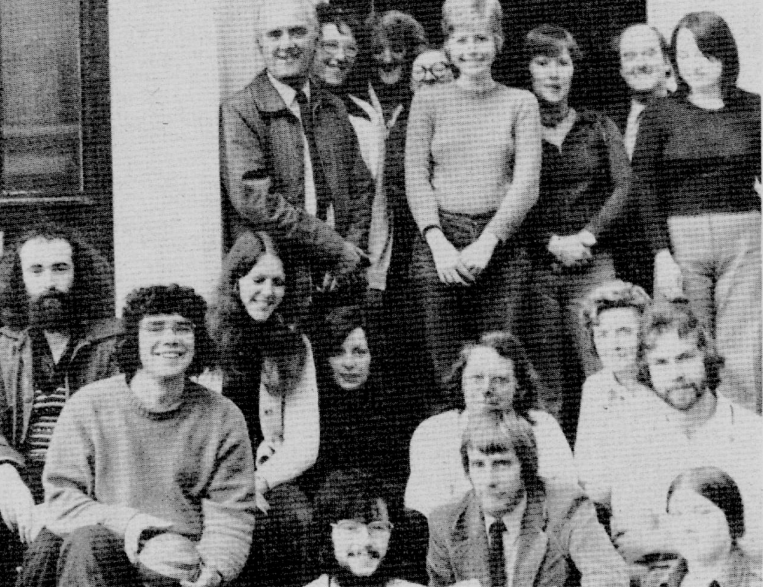
The expanding staff of Neighbourhood Housing Services, pictured in 1976
Co-op growth at the local level was preceded at the national level by the development of a supportive regulatory and funding regime that allowed it to flourish. This included the 1964 Housing Act which established the Housing Corporation to fund “co-ownership societies” – a collective model originally imported from Scandinavia – alongside other forms of cost-rental housing. Meanwhile, the 1969 Housing Act supported the establishment of General Improvement Areas.
In 1974, following the election of a Labour government, the Housing Corporation was empowered to provide extraordinarily generous Housing Association Grants (HAGs) covering 100% of the costs of land acquisition, development and ongoing management and maintenance. At first this only applied to housing associations but was shortly extended to include co-ops too.
The Housing Corporation also established Co-operative Housing Services as a national “secondary” organisation providing services for “primary” co-ops around the country. This resulted in the rapid growth of co-ops nationwide, and a quarter of them were in Liverpool – largely due to a fortuitous change in the city’s politics.
In 1973, the Liberals broke Labour’s hold on the council which had lasted for almost two decades. In coalition with the Conservatives, the Liberals pursued an alternative policy of neighbourhood improvement, expanding the voluntary rental housing sector and owner-occupation, while halting demolition and council house building. By the mid-1970s, Liverpool had the largest Housing Action Area policy in the UK, covering 23 inner-city nineteenth-century neighbourhoods.
At this time, around 3,000 terraced houses in the southern inner city suddenly became available for improvement, following the collapse of a big property investment company variously known as Hibernian or Realmdeal. Following liquidation its portfolio was divided between the housing associations operating in each area, with the council allocating whole neighbourhoods to preferred partner organisations for rehab.
These council-demarcated zones created natural monopolies for the housing associations, thereby ensuring they were the only actors capable of delivering improvements under the 1974 legislation. The “fair rents” regime proved too stringent for private landlords to cover relatively high costs of rehab, whilst the Housing Corporation’s generous HAG funding and tight eligibility requirements guaranteed the economic viability of housing associations (and, from 1975, co-ops too).
Looking for secondary support to develop its rehabilitation programme, the council invited the London-based Co-operative Housing Services to work with them in Liverpool. The local secondary organisation, Neighbourhood Housing Services also decided to pursue rehabilitation as a means of expanding the co-op sector, and lobbied the council to be considered in the zoning policy. As a result, large parts of Toxteth and Granby in L8 were zoned for “co-operatives” as part of the General Improvement Area strategy, with Neighbourhood Housing Services owning and managing the stock.
Meanwhile Co-operative Housing Services established a branch in Liverpool, known as Co-operative Development Services (CDS), which specialised in developing the city’s co-ops and became an independent body in 1977.
New-build co-ops
At first the co-ops had focused on rehabilitation of older properties rather than new-build: it cost less and was also the Liberals’ preferred option. A big change was about to occur, however, through a particular group of residents around Weller Street in Toxteth. Having lived with deteriorating housing conditions for several decades with no inside toilets, baths or gardens, and growing draught and damp problems, those residents who had not already moved away formed an action group in the 1970s to pressure the council to be rehoused.
The council’s usual approach when whole streets were knocked down was to rehouse residents wherever they had available properties scattered across the city. Typically, this meant communities were dispersed as well as displaced but the Weller Street activists were demanding to be rehoused together, as a community.
The residents approached CDS who, unsurprisingly, suggested they establish a co-op – one that would develop new-build housing rather than rehabilitating old terraces. Starting with a committee of just eight, mostly young housewives, the Weller Street action group researched co-operatives and the local housing market, self-funded the creation of informative leaflets, held a public meeting in a local church hall and did some door-knocking.
By autumn 1977 they had secured a membership of 61 households who elected a committee of fifteen which met monthly and reported back to the community. In December that year, they registered legally as a co-op and appointed CDS as their secondary agency to help them negotiate with the council for a site and with the Housing Corporation for funding.
Unlike the early rehab co-ops, the Weller model was fully mutual, with all residents (and only residents) represented as members and joint collective owners – the most fully realised form of cooperative. This was important because it shifted control from external professionals to users themselves.
Non-mutual rehab co-ops were led by local professionals who had indirect personal interests in the rehabilitation projects. The early housing associations had been formed by architects, surveyors and lawyers who saw it as a way of getting business, and at the time there was no rule against earning money out of it. Their interest often included protecting their own homes from demolition, if situated in nearby clearance zones, and furthering their professional careers in the housing sector.
The “Weller way” of doing new-build followed an innovative model jointly developed by CDS professionals and Weller Street residents through a mutual learning process which instilled dweller control into almost every aspect of housing: from planning and design to ownership and management:
(1) Residents of slum clearance areas self-organise into cooperatives as a means of being rehoused without being displaced.
(2) A secondary organisation (e.g., CDS) helps the co-op identify a site, acquire land and apply for funding from the council or Housing Corporation.
(3) The secondary organisation works closely with co-op residents on education and training in a range of essential skills and knowledge, such as the planning process, interviewing, chairing meetings, accounting.
(4) The secondary organisation advises the co-op on suitable local firms and contractors, and co-op residents select a shortlist of competing agencies and then personally interviews them.
(5) Co-op residents are given the chance to select their preferred secondary organisation, aside from CDS, as their development agency to build, manage and advise on the project, as well as choosing their preferred architect.
(6) Residents work closely with their chosen architect to design a scheme according to community preferences through tenant participation.
(7) The final design reflects local needs but must meet Housing Corporation regulations to be eligible for funding, with tenants paying “fair rents”.
Secondaries like CDS were vitally important for helping co-op groups navigate the many pitfalls in this bureaucratic journey. The Weller Street co-op faced a particular problem over the number of council nominees to be allocated homes in its scheme. The quota was often set at 50% if the council had part-funded development but Weller was already struggling to find space for the entire local community to live together, let alone additional council nominees. CDS chief executive Catherine Meredith ardently supported the co-op in meetings with the council and persuaded them to give Weller Street full control over their own allocations.
Much of the political brokering, technical expertise and administrative oversight came from CDS. They became an indispensable source of professional prowess and cooperative idealism for helping Weller Street residents – and, subsequently, dozens of other communities – achieve their goal of collective dweller control.
Notwithstanding the crucial administrative, educational and support role played by CDS in the development of new-build co-ops, the energy for the Weller Street campaign grew from the grassroots.
Developing a co-op in your neighbourhood required extraordinary energy, time and dedication throughout an arduous process which could often take four years to complete. This was an all-consuming and exhausting process for many involved, but one which produced some amazing unforeseen benefits. In The Weller Way, Alan McDonald, who worked with Weller Street residents for CDS, gives a rich description of the campaign process: attending countless seemingly endless meetings after work; piling into cars in search of suitable empty sites across the locality; presenting site surveys to the council; petitioning local Labour councillors to back bids to acquire public land. Then there were the more formal committee meetings with CDS, interviewing architects and builders, and working with them on a weekly basis thereafter.
While campaigning placed great strain on people’s lives it also brought them together in solidarity, strengthening the community in a common cause. This was helped by the fact that Weller Street, and the first few new-build co-ops that followed, were established exclusively in cohesive working-class communities.
Co-ops also created unexpected opportunities for men like Billy Floyd, Weller Street’s chair, who worked by day as a milkman. It gave them the chance to flex dormant skills and capabilities, wasted in their previous life. As one professional working closely with Weller Street remarked, co-op campaigners had been “lost in their day jobs until they found a vehicle. So the co-op process was a kind of a university for some people. In the same way that the trade union movement was a university for other people”. This process of empowerment and political awakening is evident throughout the rank-and-file members and remains one of the most remarkable and lasting contributions co-ops made to life in Liverpool.
However, many of the benefits, and certainly the power, accrued to those in leadership positions – which sat awkwardly, incompatibly even, with cooperative principles of participation, democracy and equity. Weller Street was marked by a problematic division between general membership and leadership, the self-appointed representatives speaking and acting on behalf of the rest. This “inner cabinet” – or “war cabinet” – was composed of a management committee led by Floyd, with three main specialist sub-committees, each deciding on different design and development issues.
Despite efforts, largely on the part of women, to encourage other residents to get involved, the committee failed to inspire much interest from the general membership, resulting in Weller Street “operating on two levels: the committee involved in the ‘co-op idea’ [and] the general membership in it for a house”.
Architects and amateurs
While the initial co-op idea for Weller Street came from CDS, the design process was the result of a creative collision with residents’ needs and desires. Residents demanded to appoint their own architect, and this not only put working-class people in a newly powerful position as clients, but also radically redrew the coordinates of the traditional architect–client professional relationship. CDS’s role, says a contemporaneous housing association officer, was “not to provide residents all the assistance they wanted, it was actually to provide them with mentoring guidance, so that they were able to organise themselves as entities”. Thus CDS was more ‘enabler’ than ‘adviser’.
The agency had a seminal role to play in educating and training residents with the requisite skills and confidence to ‘do-it-themselves’. A CDS development manager explains how they “developed a set of training packages for doing architect interviews; because how does someone without any background in that sort of stuff interview an architect?”
New-build co-ops required great personal dedication and time commitments from their architects and co-op development workers alike. Yet local architects nonetheless competed for the work, believing the process to be worthwhile and enjoyable for releasing the architectural imagination from the straitjacket of council housing and placing it in the service of the user. Moreover, CDS’s introduction of a market in architectural services was not only important for user choice but for the financial viability of secondary agencies themselves.
Unlike CDS, Liverpool’s other secondary organisation, Neighbourhood Housing Services, used a monopoly model for its services, employing in-house architects and surveyors. It failed to expand and diversify its customer base or compete for contracts with the new-build co-ops. When it eventually closed down in 1987, its clients were shared out amongst Merseyside Improved Houses (MIH) and Liverpool Housing Trust (LHT), as well as CDS.
The new-build co-op model was so successful that within a few years of Weller Street’s completion a further ten co-ops were replicating the model. Another example was the Hesketh Street co-op, also supported by CDS, whose residents had likewise come from slum terraces assigned for demolition.
Together, Weller and Hesketh represented the vanguard of new-build co-ops, with a strong communal identity and collective will, headed by an ideologically motivated leadership, to stay together as a community and become self-governing.
Second wave
This was followed by a second wave of new-build co-ops to rehouse the occupants of twentieth century tenements and tower blocks rather than Victorian terraces.
The municipal tenements had been built in roughly four phases. The first phase were pre-war perimeter block tenements, including one of the world’s first examples of prefabricated concrete housing, at Eldon Street in 1905. The second, inter-war period, during the 1930s, saw the construction of monumental art deco tenement blocks, inspired by site visits made by Liverpool’s city architect and housing director to Vienna. Third, the post-war phase consisted of three-storey “walk-up” tenements built in the 1940s and 1950s on infill sites left over by war damage or pre-war clearance. The fourth and final phase comprised the four- and five-storey flats and notorious tower blocks, such as the Piggeries, built to replace terraced housing in the comprehensive redevelopment of the 1960s.
Although much of the terraced housing was in good enough condition to rehabilitate, tenement blocks were by the 1970s in need of a drastic overhaul, and so the “slum clearance programme” was rearticulated as the Liberals’ “tenement rehousing programme”.
Out of this came the second wave of new-build co-ops. Unlike the earlier and more recent collective housing activism, such as the rehab co-ops, these initiatives were almost unanimously pro-demolition. The first was Prince Albert Gardens in the south end, formed in 1979 and completed in 1983; shortly followed by other tenement-based co-ops, such as Dingle and Mill Street and Shorefields.
In part, the cooperative movement was a pragmatic popular response to these conditions. A former council officer believes that during this new-build second-wave period “the co-operative movement grew because our housing offer was just awful: the waiting lists were huge, we had squatters coming out of our ears and we couldn’t manage voids [empty properties]”.
Her colleague agrees, indicating the scale of unmet housing needs and remembering how would-be tenants turned to desperate measures: “Well, people on the waiting list used to just open up voids and just let themselves in. At one stage we had three or four hundred squatters … it was madness! So you can see why the co-operative movement was ripe really: ‘these won’t do it for us, let’s do it ourselves!’”
Two relatively distinct phases therefore mark the new-build co-op movement: the first arising from ‘slum’ terraces among tightly knit communities who wanted above all to be rehoused together; the second emanating from dissatisfaction with housing conditions in tenements built only a few decades earlier. Why had the municipal tenements deteriorated so rapidly? A large part of the problem was insufficient public funding for maintenance.
This was not a flaw in the architecture itself or the design per se, but the result of careless treatment and deficient investment following construction.
Depending on your political perspective, you can lay the blame at either too much public intervention in housing or too little. Owing to unique circumstances in Liverpool in the 1970s, in which neither perspective was able to hold sway over public policy, this debate was never truly resolved. Thus the housing crisis was left unabated.
* * *
Matt Thompson is Lecturer in Urban Studies at the Bartlett School of Planning, University College London. This article is an edited extract from his book, Reconstructing Public Housing: Liverpool’s Hidden History of Collective Alternatives, published by Liverpool University Press in 2020.
FURTHER INFORMATION
Upping the rent: a landlord’s tricks of the trade
Liverpool People’s History, July 2025
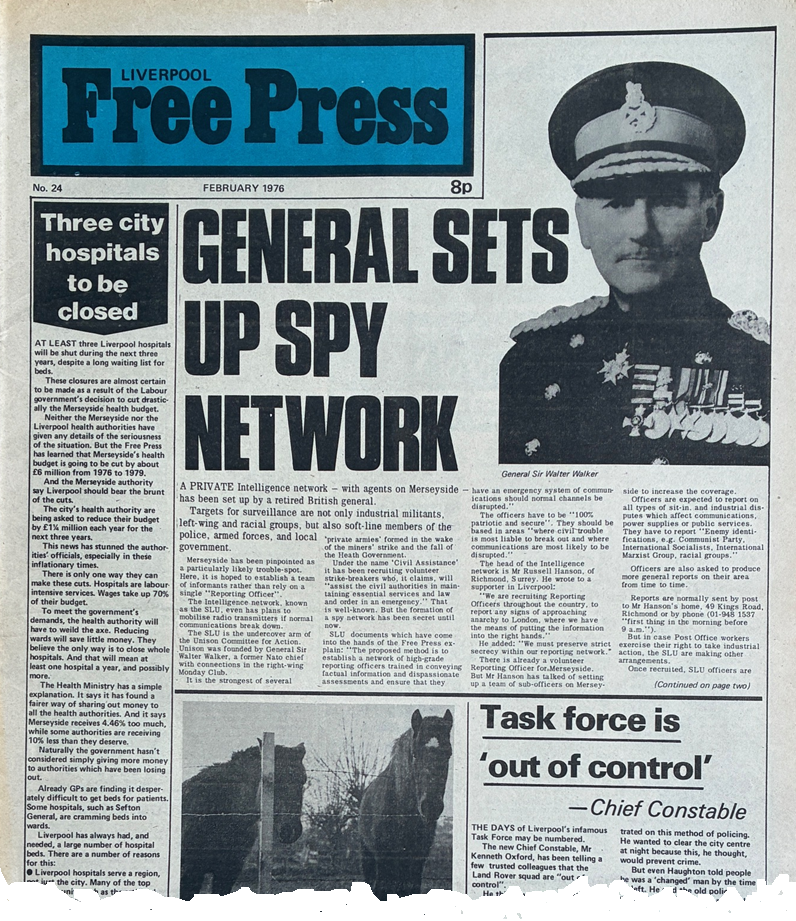
Articles and letters in Liverpool Free Press …
Something Ventured … something gained
May 1974, p 1 (continued on p 10)
Letters to the Free Press
(from Venture Housing Association and Richard Crawshaw MP)
September 1974, p2
Letters to the Free Press
(including one about housing associations)
September 1975, p 4
Housing co-op rule OK
February 1976, pp 6-7
Just who really benefits from housing co-ops?
March 1976, p 4
Letters to the Free Press
(including two letters about housing co-ops)
June 1976, p2
The housing co-operative boom that came too soon
April 1977, p 8













0 Comments