Liverpool People’s History

Revisiting the 1970s and 1980s

How Netherley women organised a ‘carnival in Alcatraz’

3 comments

The banner on a block of flats said “Welcome to 1976 Carnival at Alcatraz” but the actual place was Netherley, the bleak council estate where people often felt like prisoners.
During one week in August, though, Netherley suddenly came to life and its carnival was a huge success. Nothing of the kind had ever happened there before and the organisers saw it as the first step towards building a community in the concrete wilderness.
The idea originally came from a group of mothers who had previously been active — though not very successfully — in tenants’ campaigns.
In the account below, published by Liverpool Free Press shortly after the carnival, one of the women, MARIA O’REILLY, describes why they did it, how they organised it and what it achieved.

.

Netherley

Netherley

.

WE THOUGHT about doing a carnival after about a year of doing our militant work. You would get people saying things like “I’m not coming because it’s always left to a few to do it”. And I always thought to myself: “There’s something missing. Why won’t they fight to defend where they live?” And I realised they didn’t feel as though Netherley belonged to them.

Until you had something to fight for that belonged to you, you would never fight. So I thought: “If I can give them Netherley, then afterwards try and get them to defend it we’d have a better job than just leaving it to a few diehards.”

Another reason which started us off into the carnival was when the old lady on the landing got kicked and she died, and it was an act of vandalism as she was asking the children to move. We went round the schools — me, Maureen Curran, Shirley Parkinson and Maureen Smith — we talked to the children about vandalism and things that they did … like throwing things off landings.

And we explained why they did it, and that there was nowhere to play and they were bored. And we said: “If you will do this one thing for us. we promise we will do something for you.” The vandalism rate just dropped. We found if we approached them as adults we were getting an adult attitude back. We weren’t roaring and shouting. We were trying to get something through to them — and it worked.

We thought first thing to do is find out how many more are interested. So we put out about a thousand leaflets. We got the Comp [Netherley Comprehensive School] to run them off for us on tick. It only cost £2.30 but we didn’t have it.

The first meeting we had wasn’t so bad. “We got about fifteen [people]. The second meeting there was six — then three of them didn’t turn up till nine. And that was after a thousand leaflets had gone out.

We made a mistake of not putting it over in the first leaflet exactly what we wanted. So we made certain then that every leaflet which went out, people knew what was expected.

Somebody on the estate accused us of stealing £400. So we went and put up a big notice in the Post Office (I put it up because it was me that it was about) saying about the £400 — I hadn’t done it, it was all fictitious, blah, blah, blah, and I would take them to court. I said, any jangling to be done on street corners by misinformed people because they don’t come to meetings is no use to anybody. Everyone’s welcome and they are open meetings.

[That seemed to arouse people’s interest and 160 urned up at the next meeting where they watched films of the earlier Granby and Old Swan festivals …]

We discussed their mistakes. Granby Festival — that was done by the paid workers. And as soon as the workers stopped being paid, well, then it all finished, which was wrong really.

This [in Netherley] was all done by the mothers … Anyone paid to do the job comes in and doesn’t know the people. We had the advantage that we lived here, we knew exactly what breed of people we had to deal with.

[One feature of the carnival was the street parties. People were asked to organise these themselves and to raise their own funds.] 

We said: “Call your own coffee mornings. Get your neighbours interested and form your own committee from there. We also made it that they couldn’t go outside their own area with their raffles. The only people who could travel the estate was Shirley and the two girls she had helping her. They could use the whole estate ’cause they were raising for general funds.

[It was only when people started organising the street parties that some of them realised how little contact they had with their neighbours.]

People would say: “Oh they’re awful funny in our square. You don’t know them. You can’t go asking them for money.” And we’d say: “For God’s sake they can’t be that funny. Go and knock and tell them you’re leaving their kid out — you know, literally put it like that.”

We had a plaque for the best presented area during the carnival … We knew as this was the first time we wouldn’t get people to decorate. So we thought: let’s make it a competition. And so one square was trying to outdo the other. The only places we couldn’t get interested were Langshaw Lea, Paveley Bank, Fulshaw Close. We tried absolutely everything. I think they were sitting waiting for somebody to do it for them.

Crepe paper and everything … the wholesaler said he’d never heard of Netherley until we started coming in for crepe paper. We had the judge out on Monday [but] any bits of the squares that hadn’t decorated were queuing in Woolworth’s on Tuesday morning and they were decorating during the week.

The police came in the morning [of the parade] and said “How many are you expecting?” and being ambitious I said 300 — thinking deep down in my heart and soul we’re not going to get 300.

When we got to the Comp there were thousands, literally thousands, see, and you didn’t realise how many there was until you were down by Naylorsfield and looked back and they were still coming out of the Comp and they were about twenty deep and that’s when you really realised you’d won.

Everyone was dressed up, mothers, fathers, aunties, uncles, grandmothers, kids. Costumes … we got fifty from the Everyman Theatre, and this was an encouragement. We gave them out to two mothers in each square and we said on the leaflets: “Two mothers have got them. But we want everyone else to make their own. Most people are doing it.” As far as we knew nobody was doing it. It was a bluff.

And they did it. One lady had a frock with a big cushion up and a note on her back saying “Was it Bill or was it Ben?” All sorts of things which were absolutely comical.
Netherley carnival badge

Netherley carnival badge

The first site after the parade was Brittarge Brow and when we got there it was very disorganised. That was our fault, the reason being that we didn’t expect as many.

There was nigh on one hundred children in fancy dress to judge, and we were at sixes and sevens. We had the fancy dress, there was the inflatable, there was horse rides, there was general games going on. We bought toys for every child on the estate and we had to give these out.

The fancy dress the mothers made the children were ingenious. They were marvellous. A robot won. It was cardboard boxes covered with Bacofoil, God help him, he must have been roasted. There was one tramp [fancy dress outfit] that was that authentic you would have walked past it in the street. And they called the police out for a laugh and said they had a tramp in the square. And the bobby was saying “Come on there, you are upsetting the children, you are spoiling the carnival.”

We’ve not made people happy who didn’t have any money, were hungry, or have got real problems. You just couldn’t do that. We gave them a happy week and something to smooth over their wounds.

We felt if we gave a week where people said “Oh bugger the problems” even if they said “bugger the rent” and they spent it on their children and on a good time… Anyone anywhere in this depression deserves a bit of happiness sometimes. I don’t think one week of not paying your rent or your bills would make much difference as long as it makes you happy.

Every sort of group on the estate got more or less involved … the majorettes, the judo, the morris dancing.

You had people saying “Oh does that go on all the year?” or “I wouldn’t mind joining that” or “I didn’t know there was one”. And people are still carrying on certain things … boys’ football — he wants to expand that really big — ladies’ football that they can keep on all the year round … forming an entertainments committee for the estate, making sure you know that certain things go off — dances.

The way people got involved was just fantastic, and it must have been something they were waiting for and waiting to do, otherwise it couldn’t have gone off.

We must have given them something they always wanted and we only just gave them the idea and from then they built it up themselves.

I have a feeling that next year the different area committees may organise their own site for their own particular day and fit it into a programme. Which will be even better. They don’t need a coordinator — that was only for the first year.

We found organisers and people who could do jobs that they never realised they could do before, and maybe they didn’t get the training at school and yet could get out and organise groups. People get paid thousands of pounds to organise big companies. Well. these girls did it on small scales and did it equally as well.

.
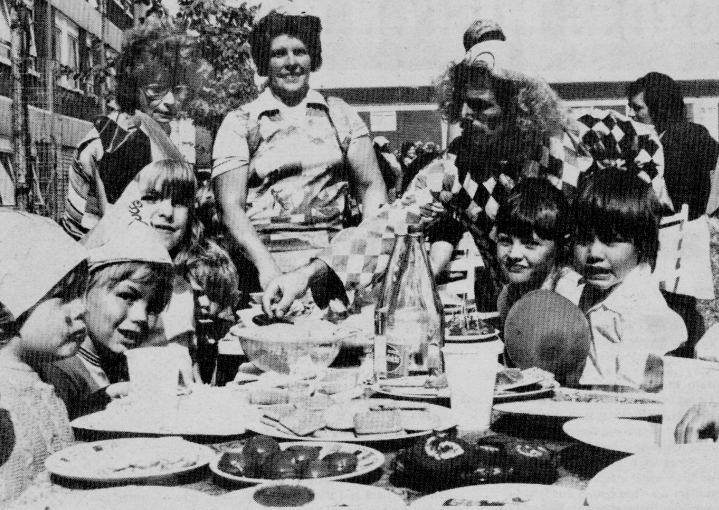
netherley street party

One of the street parties at Netherley Carnival, 1976

3 Comments

  1. Mariaoreilly

    Took me down memory lane and thd fabulous people of netherley
    Through the determination of hhe flstdwellers action group the flats where demolished and the children of netherley carnivsl era now live in houses with gsrdens

    Reply
    • Julie Meredith

      Well Done Maria you should be so so proud of yourself…… YA SMASHED IT GIRL!

      Reply
  2. Julie Meredith

    This was a most brilliant trip down memory lane…..brought back such Happy Memories….but still had tears in my eyes reading it… Maria Reily and the other Mums that started this should be so so proud for what they achieved WELL DONE and a BIG THANK YOU IT WAS WONDERFUL XXXX

    Reply

Submit a Comment

Your email address will not be published. Required fields are marked *

LATEST POSTS

Friends of the Earth and the war against waste

In the 1970s, amid an ever-growing volume of rubbish dumped into landfill sites, environmental activists began a campaign to promote recycling.

Something nasty in the air: residents’ battles against noxious chemicals

Accidental emissions and hazardous waste from Merseyside’s chemical industries caused much alarm in the early 1970s. The government responded with two important pieces of legislation: the Control of Pollution Act and the Health & Safety at Work Act.

From riots to regeneration: Michael Heseltine and the great Mersey clean-up

How the Thatcher government’s environment minister inspired a campaign against pollution – and laid the foundations for Liverpool’s economic revival.

George Melly

George Melly was a multi-talented musician, writer and entertainer – a larger-than-life character noted for his exuberant sartorial style.

How working on ‘the Lump’ angered trade unions and caused a taxing problem for the government

The ‘Lump’ was a controversial practice in the construction industry where workers received a lump sum for each completed job, instead of a weekly wage. ‘Lump’ workers could earn more than regular employees but since they were supposedly self-employed they had no job security and were not covered by health and safety regulations.

Bob Dylan in Liverpool: 1966 and all that

When pop music came of age Liverpool was at its heart. Not only the Beatles and Merseybeat. Bob Dylan was part of it too. PHIL OATES explores the singer-poet’s connections with the city and how, on the sidelines of a controversial concert in 1966, it became a place of pilgrimage where he paid tribute to some of his literary and musical heroes.

How male prejudice toppled Britain’s highest-ranking police woman

In 1983 Alison Halford achieved what no woman had done before: she became an Assistant Chief Constable in Merseyside police – which also made her the highest-ranking officer anywhere in Britain. Nine years later, though, her police career lay in ruins. In an acrimonious legal battle she accused the police of sex discrimination and the police retaliated by accusing her of misconduct.

Mathew Street and the ‘Pool of Life’

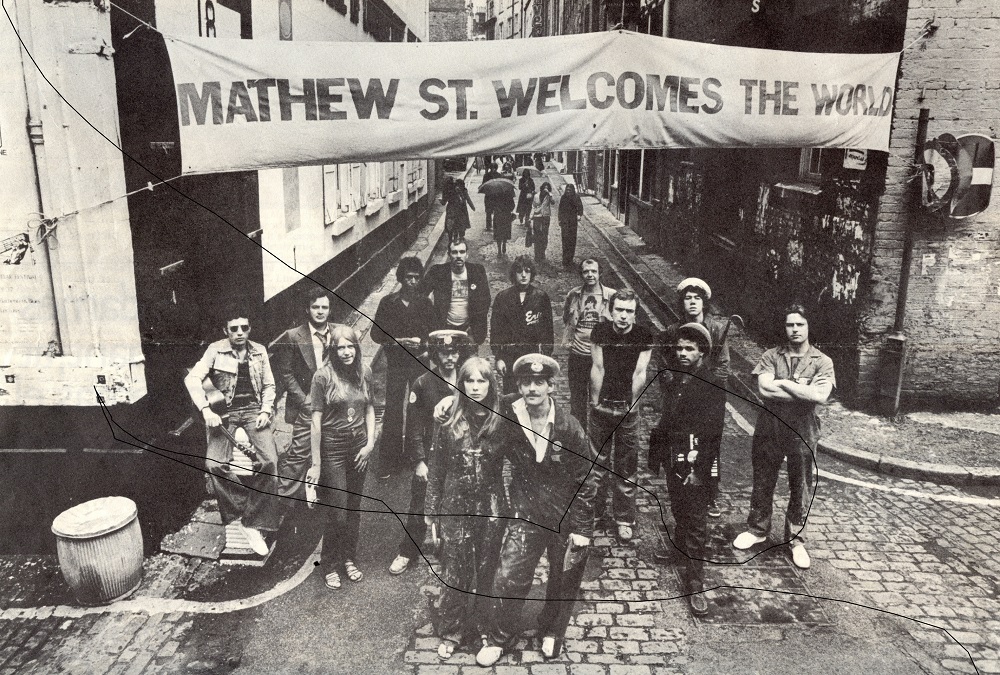
The Beatles were gone but in the 1970s Mathew Street lived on as the epicentre of Liverpool creativity, drawing its energy from Eric’s Club, the Liverpool School of Language, Music, Dream and Pun, the Probe record shop and, according to some, the magical power of ley lines.

The acid factory that made St Helens fume

Leaks and emissions from a sulphuric acid factory brought constant complaints from local residents. Despite three public inquiries and several prosecutions, the problem continued for years and the council was powerless to stop it.

Pushing the boundaries of education

The City of Liverpool Community College aimed to provide qualifications for people who had left school without a certificate.
It also worked closely with local communities, providing literacy and numeracy classses for adults with poor basic skills. Later, though, the word “community” was dropped from its name.

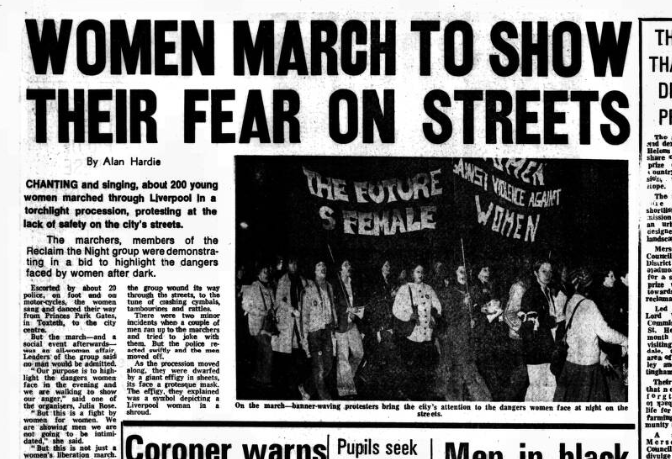
Reclaim the Night

Women’s campaign against male violence

Trouble in toytown

When the Meccano factory suddenly closed down in 1979, workers fought back by occupying the premises.

How the Campaign for Homosexual Equality brought gay Liverpool out of the shadows

Despite relaxation of the law against homosexuality in 1967, gay people faced a continuing struggle for social acceptance during the 1970s.

The ghost cinemas of Liverpool

With the closure of cinemas Liverpool didn’t just lose buildings. It lost communal dreaming. Cinemas were places where you sat alongside strangers and felt the same fear, laughter, romance, and hope. In a city shaped by migration, war, poverty, and labour, cinemas offered shared narratives that crossed boundaries.

Creating jobs for the jobless

The Job Creation Programme was one of several government initiatives in the 1970s aimed at reducing unemployment, especially among school leavers. Local authorities, businesses and voluntary organisations were all urged to sponsor employment projects, with the government covering wages and other costs from a £75m fund. But what did it achieve?

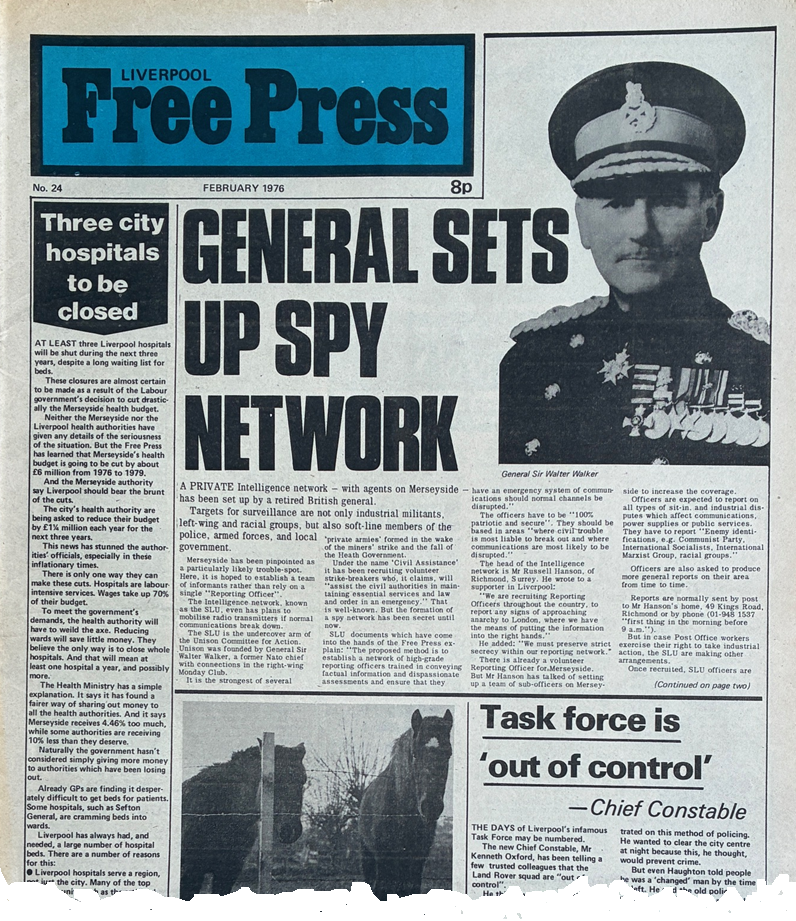
The privatisation of intelligence gathering

In the political and industrial turmoil of the 1970s, left-wing militants  –  especially among the trade unions  –  were treated as a threat to national security. Monitoring their activity was a task officially assigned to the police Special Branch but the police faced competition in the form of unofficial intelligence networks run by shadowy right-wing organisations. This article looks at the controversy generated by two of them: the Economic League and the Unison Committee for Action.

Rehousing Liverpool (1): From slum clearance to rehabilitation

Slum clearance in the 1960s and 1970s separated people from friends and neighbours they had known for years. Tens of thousands were “decanted” to new estates on the edges of Liverpool. But demolition and displacement weren’t the only options and in Toxteth the Shelter Neighbourhood Action Project initiated a new approach.

Rehousing Liverpool (2): Grassroots initiatives

Housing cooperatives began with the idealistic goal of giving residents control over their own homes. They were voluntary organisations that focused on rehabilitating run-down terraces (and, later, building new estates) with the aid of loans and government grants. Decision-making was in the hands of co-op members rather than the council or private landlords, but the members often had no previous experience working with architects and other professionals – which led to them making some surprising choices.

Rehousing Liverpool (3): Liberal compromises

The Liberals took charge of Liverpool City Council in 1973, though without an overall majority. They abandoned the construction of new council homes in favour of new-build co-ops. Thus what had started out as a radical and marginal movement for residents’ control was watered down as the new mainstream. However, the initial success of these co-ops created a demand for more that was impossible to meet because of government spending restrictions.

Rehousing Liverpool (4): Militant and ‘bourgeois’ housing

For several years in the 1980s Liverpool city council was dominated by members of Labour’s Militant Tendency which promised to build a thousand new council homes every year. Elsewhere in the country, municipal housebuilding was almost at a standstill and the cost of Liverpool’s ambitious plans brought a confrontation with the Thatcher government.

Militant also had ideological objections to housing co-ops which it saw as a backdoor form of privatisation benefiting the bourgeoisie rather than the working class.

Fun in the dismal days of Thatcherism: the story of ‘The End’ magazine

‘The End’ magazine was produced by the young and read by the young. It talked mainly about football, music, beer and made jokes about life without a job. The End had plenty of attitude and was often outrageous. It published witty poems that didn’t always scan and letters from readers who it then insulted in print. But that didn’t matter because it gave people a laugh – and built up a cult following.

Hounded out of town: the caravan dwellers with nowhere to stay

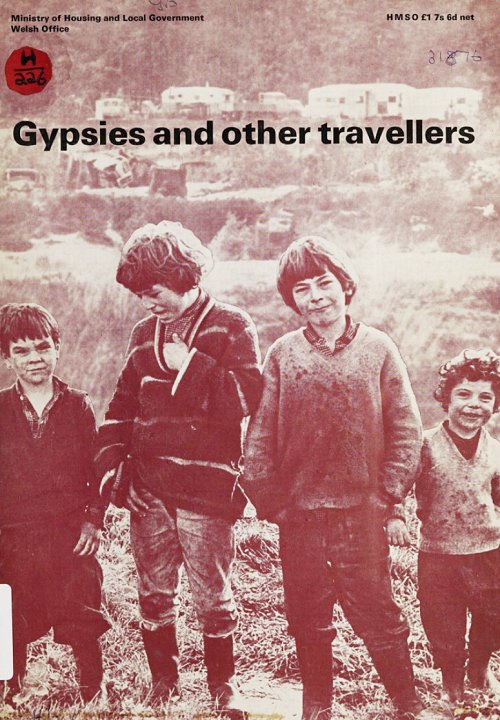
In the 1970s gypsies and other itinerant caravan dwellers faced constant battles with the authorities due to a lack of places where they could legally camp. After eviction from one patch of waste land they would move to another, where the process to evict them would begin again.

Neighbouring local authorities engaged in a sort of ping-pong game, batting the problem of unwelcome caravans back and forth across each other’s administrative boundaries.

A drink in the most dangerous pub … and a riotous night in Kirkby

The Eagle & Child pub in Huyton had a city-wide reputation as a clearing-house for stolen goods. Fights broke out almost every night and police officers who went to take a look would be pelted with eggs and beer. Former Post & Echo journalist John Toker recalls a visit.

Photographing football – with rollickings from Bill Shankly

Stephen Shakeshaft spent four decades chronicling life on Merseyside as a photographer and later as picture editor of the Daily Post & Echo. He describes his experiences photographing football during the Shankly era – and some strange encounters with the boss himself.

Queer-bashed in James Street: the story of a Scout leader who vanished

John Gick disappeared in 1969 during a weekend visit to Liverpool from the Isle of Man. Despite extensive searches and enquiries, the police found no trace of him, alive or dead. The reason for his disappearance is still unknown but delving into the mystery opens a window on the secretive lives of men who struggled with their sexuality in the 1960s and 1970s.

Policing Liverpool: the road to the riots

When Bert Balmer took over as Acting Chief Constable of Liverpool in 1964, tackling high levels of crime in the city centre was his top priority. Determined to take drastic action, he created a special task force with a glamorous-sounding name that was sure to cause a stir in the media and  –  he hoped  –  strike fear into would-be lawbreakers. He called it the Commando Squad.

What no one foresaw was that the battle against street crime initiated by Balmer would lead over time to a breakdown in police-community relations and ultimately to the riots of 1981.

Upping the rent: a landlord’s tricks of the trade

How private landlords drove out tenants whose rents were frozen by law and replaced them with new tenants at higher rents … and how they evaded the Rent Act by pretending tenants were “buyers” or simply “users” of the property.

A pioneer in the struggle for racial justice

The name is Bond … Comrade Bond

In 1984 Sampson Bond, a 26-year-old Londoner, became head of Liverpool city council’s new Race Relations Unit following a rigged selection process. Bond was the least qualified of six applicants for the post but he got the job because his views on race relations matched those of Militant, the Trotskyist group which dominated the city council at the time and believed racial problems would be solved by the defeat of capitalism. His appointment infuriated black and anti-racism groups in the city. They refused to cooperate with him and demanded his dismissal.

The bleak council estate of Netherley was nicknamed Alcatraz because people living there often felt like prisoners. In 1976, though, a group of women took the first step towards building a sense of community – and organised a carnival. Maria O’Reilly describes how they did it and what it achieved.

Colonialism in the classroom: books for children in the 1970s

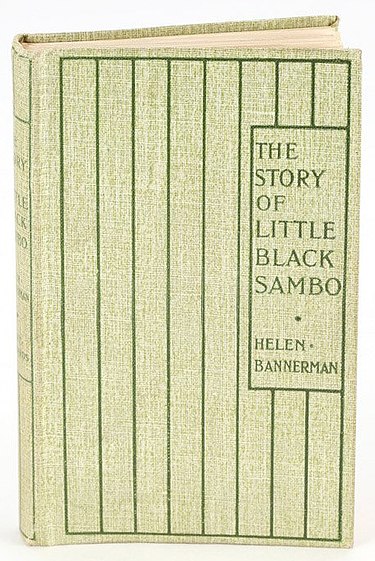
Amid concern that Liverpool’s schools were not preparing youngsters for life in a multi-racial society, the Community Relations Council carried out a study of racist attitudes in books written for children.

The NHS watchdogs that were allowed to bark but not bite

In 1974 the government established Community Health Councils throughout the country to monitor NHS performance and represent the views of patients and the public. In Liverpool, Sylvia Hikins chaired one of them for nine years, but her hopes of improving health services were constantly battered by spending cuts and closures.

Scotland Road Free School: a devastating report from government inspectors
A highly confidential report by education inspectors in 1973 gave a blistering account of the Free School in its death throes, Liverpool People’s History has discovered.

News from Nowhere: the story of a radical bookshop 
An insider’s view of the shop’s history – by Mandy Vere who worked there for 45 years.

The early years of Women’s Liberation
How the movement evolved on Merseyside in the 1970s and 1980s.

The Bridewell and the Boys from the Blackstuff
Much of Alan Bleasdale’s acclaimed TV drama was filmed at a former police station on Prescot Street.

Police, drugs and ‘agriculture’ in Toxteth
In 1971 there were two notable court cases where black men accused of possessing cannabis were acquitted after claiming police had planted it.

The Liverpool Scene – and beyond
In the 1970s and 1980s Merseyside poets dared to be popular – challenging the idea poems can’t be ʽgood’ unless they are elitist.

International Garden Festival: a treat for ʽcomfortable Britain’
The Garden Festival in 1984 attracted more than three million visitors and helped to regenerate Liverpool. But what benefit did the visitors get from it?

Arthur Dooley, sculptor
The former shipyard welder who turned scrap metal into art.

Merseyside Unity Theatre
Drama and agitprop in the 1970s: an account by one of the theatre’s founders

From word games to Dial-a-Poem
How the Windows Project spread new forms of creativity among children and adults.

Concrete is beautiful: the Shankland master-plan
Graeme Shankland was a planner hired by the council. His vision for Liverpool was to tear down much of the centre and replace it with “robust and manly” new buildings encompassed by an inner motorway on stilts. His plan has since been described as “notorious” and “a nightmare”, and fortunately most of it was eventually abandoned.

The Civic Centre fiasco
In the 1960s Liverpool council embarked on a plan to bring all corporation offices under one roof in a massive city-centre building to be known as the Civic Centre. They spent years buying up properties that stood on the site but the new building became unaffordable and a public inquiry condemned its design as “oppressive” and “overpowering”.

Filming the community: Old Swan festival, 1976
Old Swan was a rather drab part of Liverpool but for a few days in 1976 it became an extraordinary place where residents held a community festival described as “an explosion of colour and noise”. In the midst of that, though, it wasn’t always clear where reality ended and the entertainment began — which in a way added to the fun.

Radio Free Liverpool
On Merseyside in the 1970s clandestine broadcasters played a cat-and-mouse game with the authorities who were seeking to confiscate their transmitters.

‘Seducing’ soldiers
Activists campaigning against Britain’s military presence in Northern Ireland faced surveillance and prosecution during the 1970s.

Liberty Hall
A club “for people who are interested in politics but don’t wish to belong to a political party”.

The battle to save Fisher Bendix
The Fisher Bendix factory in Kirkby had been built with government help to ease unemployment in the area. It wasn’t a success and in 1972 when the owners tried to shut it down workers occupied the factory in an effort to save their jobs. Three years later they began running it themselves.

Trade unions? No thanks! We’re Marks & Spencer
M&S, in its own estimation, was such a good employer that unions were unnecessary. In theory, staff were free to join one if they wished, but the company had ways of making sure that unions didn’t gain a foothold.

Where women ‘never had time to get bored’
Litttlewoods football pools once provided jobs for thousands of Liverpool women. Former employees describe what it was like to work there.

Revolting students: the Liverpool University sit-in, 1970
Students accused the university of ignoring its responsibilities by trying to isolate itself from the social and political consequences of its policy decisions. They occupied the university’s Senate House building for ten days and nights. One participant was expelled and nine others were suspended.

Democracy in the classroom: Scotland Road Free School
Come to school when you want and do what you like. An experiment in classroom democracy that didn’t work out.

GET INVOLVED
Since this is a “people’s history” website, it’s intended as a collaborative effort. Click here to find out the various ways you can take part.