Liverpool People’s History

Revisiting the 1970s and 1980s

Friends of the Earth and the war against waste

0 comments

By the 1970s the average British household was producing a ton of rubbish every year and almost all of it ended up on landfill sites like the one at Otterspool which had served as Liverpool’s municipal refuse dump since 1945.

Disposing of domestic waste cost local authorities money and the cost was increasing because the volume of rubbish had grown considerably during the 1960s. Locations for new landfill sites were also becoming more difficult to find and had to be chosen carefully to reduce the risk of unintended consequences –  for example, by polluting watercourses.

Mouldering waste in disused landfill sites could still cause problems years later. When the Otterspool site in Liverpool was eventually covered over to make way for the 1984 Garden Festival methane gas was still leaking from the rubbish underneath and a venting system had to be installed to guard against fires or explosions.

A lot of the material dumped into landfill, such as paper, glass, plastic and metals, potentially had some economic value. If separated from the general mix of rubbish, it could be re-used or re-purposed  –  which is where campaigns by environmental activists came into the picture.

Friends of the Earth (FoE), established in San Francisco in 1969, soon had offshoots in other countries. It first attracted attention in Britain a couple of years later when supporters in London returned 1,000 “non-returnable” glass bottles by dumping them outside the headquarters of the Schweppes drinks firm.

Protests in supermarkets

Local groups were springing up in other parts of the country and the first reported action in Liverpool came in January 1972. A group of about 30 FoE supporters, armed with stickers saying “Hazard to the environment”, entered a supermarket in St John’s Precinct and began attaching them to items on the shelves. Staff quickly intervened and told the protesters to leave. A couple of weeks later a second group turned up at Safeways in Wallasey with more stickers.

The following March, FoE supporters gathered in Liverpool’s Church Street to protest against throw-away containers. Leading their demonstration was “Miss Catastrophe 1972” (15-year-old Cilla Dugdale from Crosby) dressed in disposable plastic cups.

Two reasons for the growing volume of household rubbish were the use of non-returnable containers and what FoE regarded as wasteful packaging of goods in the shops.

In the old days, many food items were not pre-packed. If you wanted cheese, for example, the grocer would cut a piece from a larger block, weigh it and hand it to the customer in a plain paper bag. That died out with the arrival of supermarkets and other shops where customers served themselves. Goods now came ready packed and the packaging was more than just a protective wrapper: it was designed to tempt customers by looking attractive, though with little regard to whether the materials used were environment-friendly or necessary.

The use – and recycling – of glass bottles was also in decline. During the 1950s and early 1960s soft drinks had been sold in glass bottles and the price often included a small deposit –  to be repaid when the bottle was returned for re-use. Non-returnable plastic bottles – whether glass or, increasingly, plastic – saved drinks firms the trouble and expense of collecting the empties and preparing them to be re-filled. What happened to the bottles afterwards wasn’t the companies’ concern: it was a problem for others to deal with.

Weaponising waste

This drift towards a throw-away society marked a sharp contrast with the 1940s when wartime shortages led to recycling on a massive scale. The government’s National Salvage Scheme had been treated as part of the war effort and official propaganda presented it to the public as a way of helping to defeat Hitler. One poster showed how household rubbish could help to keep Wellington bombers flying …
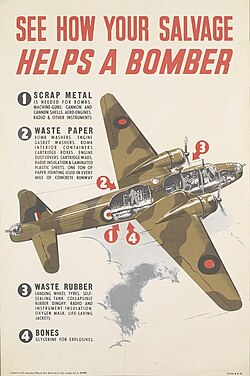
Millions of civilians were mobilised to collect waste paper, scrap metal, rubber, glass and even animal bones and kitchen waste. Bones were important because fat could be extracted to make glycerine, a component of explosives, while kitchen waste could be fed to pigs.

Local authorities were in charge of salvage operations but the scheme would not have been successful without help from more than 40,000 members of the Women’s Voluntary Service (WVS), a charity that had initially been created to support people affected by air raids.

The effectiveness of the salvage scheme hinged on persuading the public of its importance and developing a salvage-minded society. To raise awareness, WVS members went canvassing door-to-door and delivering leaflets. Later, thousands of them signed up as Salvage Stewards with the following duties:

• By education of the householder and by personal example to increase the amount of salvage collected in your area.

• To advise the householder from time to time on the different kinds of salvage required and how to sort it at the house.

• To assist so far as necessary in providing local dumps or depots in your area, and thus make easier the work of collection.

• To report to the Salvage Officer or the Local Authority any difficulties and any suggestions for the more efficient collection of salvage.’

The scheme survived for a few years after the war but government interest in maintaining it declined and the Salvage Directorate was eventually shut down in 1950.

Pulverising rubbish

Fast-forward to 1975 and recycling of household waste was almost non-existent. The wartime National Salvage Scheme had made it a realistic proposition by persuading the public to separate paper, metal, bones, etc, before collection, but that was now pointless because local authority collectors didn’t discriminate: all kinds of refuse were tipped into the same vehicle and then crushed to make space for more.

“The whole basis of current domestic waste collection is that waste is pulverised in the collecting vehicle to reduce its volume and make for ease of handling,” P B Hewes, a senior manager at a waste disposal firm, wrote in the Liverpool Daily Post. Once the waste had been pulverised, though, separation became much more difficult: “The further down the disposal chain an attempt is made to separate out certain waste materials from the total mix, the more difficult this operation becomes and hence the more expensive the task.”

Industrial waste

Hewes was more hopeful of the prospects for recycling industrial wastes:

“A considerable number of companies already recycle their own material waste in-house, e.g. metals, plastics and paper. This has increased significantly over the last two years or so as a direct result of the rising cost of raw materials making recycling of wastes essential to the economics of the operation.”

He also noted efforts to automate the segregation of materials in industrial waste, “but as yet no complete answer to the problem has been found”. One relatively simple method under development at the time (which proved useful in certain situations) was a process known as air classification. Mixed material was inserted into a chamber with a column of rising air which sorted particles according to their size, shape, and density. Lighter and less dense materials were lifted up by the air flow while heavier and denser materials fell to the bottom.

Where household waste was concerned, some local authorities collected paper and card separately from general rubbish, but that was as far as it went. People could exclude recyclable waste from collection by the council — which presented them with the question of what to do with it. In the 1970s their options were limited: there were few recycling points and those that existed could be some distance away. It wasn’t until 1977 that Barnsley became the first town in Britain to establish a bottle bank.

Community initiatives

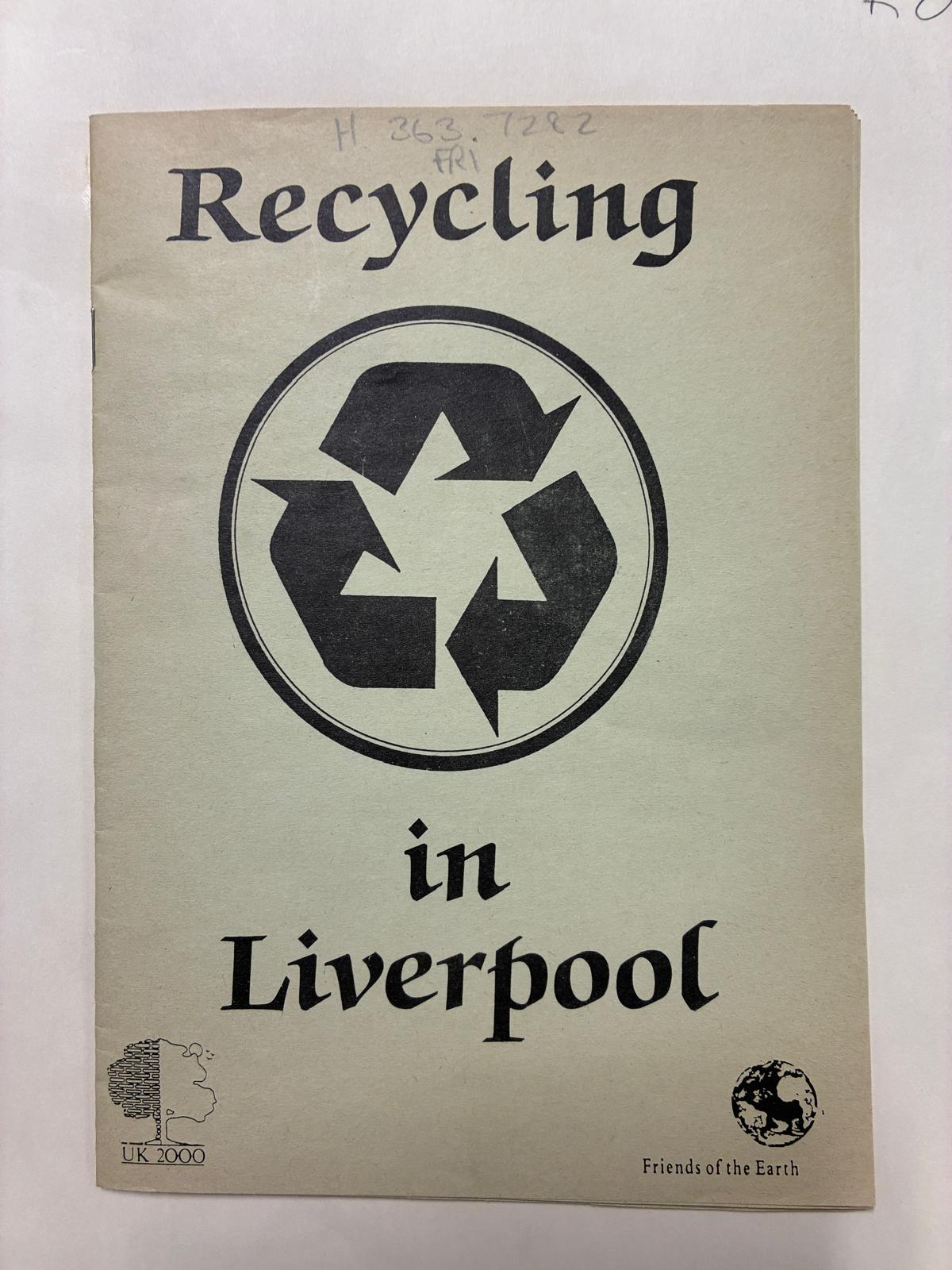
The situation had improved by the mid-1980s, largely as a result of small community initiatives. In 1985 Liverpool FoE issued a 16-page guide to recycling facilities in the area which gives a snapshot of what was available (or not) at the time …
GLASS: There were 21 bottle banks in Liverpool area, with plans to treble the number by 1991. The banks had three separate compartments: for clear, green and brown glass. Guidance notes from FoE urged people to clean their bottles and jars “if possible”, remove the tops and caps, and refrain from using bottle banks at night “as the noise may disturb local residents”.

PAPER: The booklet gave the locations of several “igloos” (dome-shaped containers) for recycling newspapers and magazines which it said were becoming a familiar sight in the city – mostly provided by a Cheshire company. Various schools had an igloo in their grounds because payment for the waste collected could boost their funds. In addition, there were occasional house-to-house collections by voluntary groups. The booklet also listed several shops selling stationery or toilet tissue made from recycled paper – and urged its use wherever possible.

METAL: “As yet there are no can banks in Liverpool, and the nearest are on the Wirral and in St Helens,” the booklet said. There was, however, a skip at Otterspool which could be used for all types of metal, including cans. “There are two basic types of cans,” the booklet explained. “One is a mixture of steel and tin and the other is 100% aluminium … both types can be recycled, though it is easier and more economic to recycle aluminium.” It noted that St Agnes church in Ullet Road was collecting aluminium cans to raise money for its organ fund – and urged schools and voluntary groups to follow that example.

PLASTIC: The booklet advised people to avoid plastic where more easily recycled materials (such as glass) were available as alternatives. Opportunities for households to recycle plastic waste were “few and far between”, though there was a firm in St Helens that made garden benches and fencing from plastic waste. During working hours plastic bags, bottles, margarine tubs and other plastic food containers could be left in a skip behind the factory. Plastic bags could also be delivered to FoE in Wavertree on Saturday mornings.

By following the booklet’s suggestions, FoE said, “the average household should be able to recycle at least 50% of its waste”. This wasn’t a comprehensive solution though, because many people didn’t bother, while those who did sort their rubbish then had the task of delivering it to the relevant recycling points.

Separate collections

Eventually, though, local authorities began making separate collections for recyclable waste and by 2024 the recycling rate for waste from UK households was just under 45%. Packaging materials — collected from households and other sources — had higher recycling rates: paper and cardboard 84%, glass 79%, metal (mainly cans) 79%, plastic 54%.

A further development came with the “Simpler Recycling” regulations introduced in stages between 2025 and 2027 which sought to standardise waste collection (though in England only).
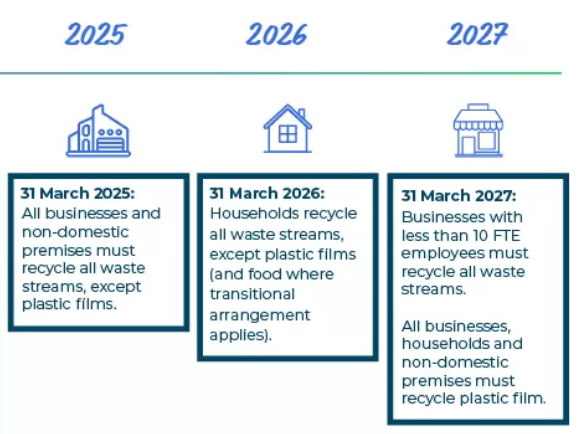
The "Simpler Recycling" regulations were introduced in three phases.

The “Simpler Recycling” regulations were introduced in three phases.

“Citizens will be able to recycle the same materials across England whether at home, work or school, and will no longer need to check what is accepted for recycling in their local area,” a government policy paper explained. “A universal standard will ensure that everything that can be collected for household recycling is collected in every region.”

That undoubtedly simplified the situation but it still left some items which might or might not be recycled, depending on the area. For example, the regulations say local authorities “do not need” to collect candles, drinking glasses, mirrors, batteries, cutlery, metal pans, plant pots, incontinence pads, nappies or “any plastic packaging or non-packaging items labelled as ‘compostable’ or ‘biodegradable’, including coffee pods”.

Nevertheless, all local authorities had a legal obligation to collect household waste in four specified categories and, to facilitate collection, households and workplaces were to sort their waste into four separate containers:

• Residual (non-recyclable) waste;
• Food waste (with garden waste if appropriate);
• Paper and card;
• All other dry recyclable materials (plastic, metal and glass).

FURTHER INFORMATION

‘Friends of Earth’ raid city store
Liverpool Daily Post, 31 January 1972, p13

Youths invade Wallasey store
Liverpool Echo, 12 February 1972, p14

Schoolgirl leads ‘dumping’ protest
Liverpool Echo, 25 March 1972, p1

Recycling: Money versus morals
P B Hewes, Liverpool Daily Post, 25 February 1975, p12

Salvage on the home front
Royal Voluntary Service, 2017

Recycling in Liverpool
Friends of the Earth booklet, 1985. Liverpool Record Office, 363.7282 FRI

UK statistics on waste
Department for Environment, Food & Rural Affairs, 2026.

Simpler Recycling in England: policy update
Department for Environment, Food & Rural Affairs, 29 November 2024.

Simpler Recycling
Guidance for waste collectors on household recycling requirements in England, 31 March 2026.


 

0 Comments

Submit a Comment

Your email address will not be published. Required fields are marked *

LATEST POSTS

Friends of the Earth and the war against waste

In the 1970s, amid an ever-growing volume of rubbish dumped into landfill sites, environmental activists began a campaign to promote recycling.

Something nasty in the air: residents’ battles against noxious chemicals

Accidental emissions and hazardous waste from Merseyside’s chemical industries caused much alarm in the early 1970s. The government responded with two important pieces of legislation: the Control of Pollution Act and the Health & Safety at Work Act.

From riots to regeneration: Michael Heseltine and the great Mersey clean-up

How the Thatcher government’s environment minister inspired a campaign against pollution – and laid the foundations for Liverpool’s economic revival.

George Melly

George Melly was a multi-talented musician, writer and entertainer – a larger-than-life character noted for his exuberant sartorial style.

How working on ‘the Lump’ angered trade unions and caused a taxing problem for the government

The ‘Lump’ was a controversial practice in the construction industry where workers received a lump sum for each completed job, instead of a weekly wage. ‘Lump’ workers could earn more than regular employees but since they were supposedly self-employed they had no job security and were not covered by health and safety regulations.

Bob Dylan in Liverpool: 1966 and all that

When pop music came of age Liverpool was at its heart. Not only the Beatles and Merseybeat. Bob Dylan was part of it too. PHIL OATES explores the singer-poet’s connections with the city and how, on the sidelines of a controversial concert in 1966, it became a place of pilgrimage where he paid tribute to some of his literary and musical heroes.

How male prejudice toppled Britain’s highest-ranking police woman

In 1983 Alison Halford achieved what no woman had done before: she became an Assistant Chief Constable in Merseyside police – which also made her the highest-ranking officer anywhere in Britain. Nine years later, though, her police career lay in ruins. In an acrimonious legal battle she accused the police of sex discrimination and the police retaliated by accusing her of misconduct.

Mathew Street and the ‘Pool of Life’

The Beatles were gone but in the 1970s Mathew Street lived on as the epicentre of Liverpool creativity, drawing its energy from Eric’s Club, the Liverpool School of Language, Music, Dream and Pun, the Probe record shop and, according to some, the magical power of ley lines.

The acid factory that made St Helens fume

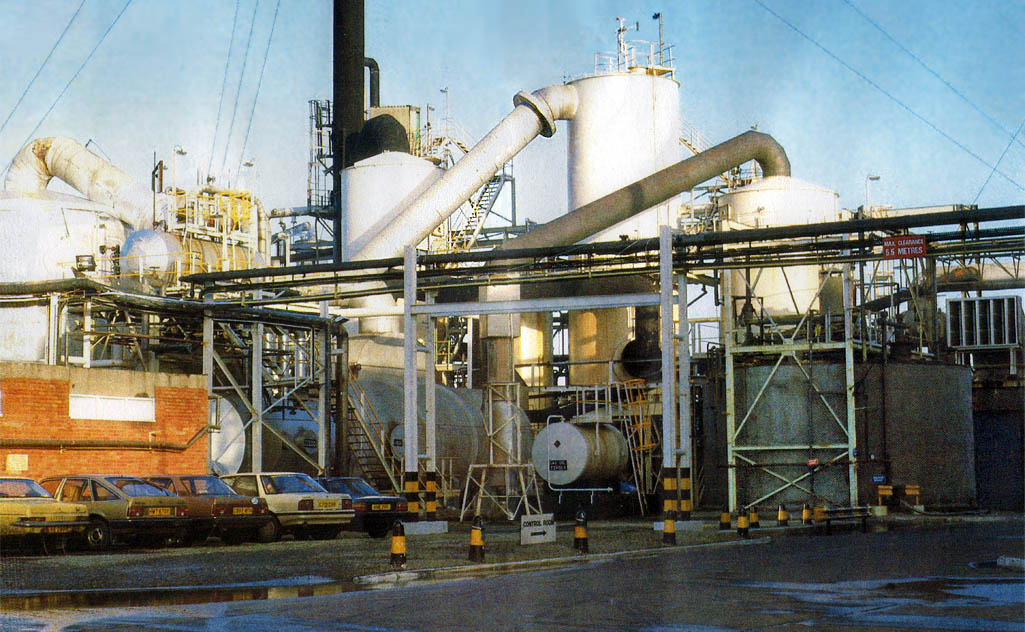
Leaks and emissions from a sulphuric acid factory brought constant complaints from local residents. Despite three public inquiries and several prosecutions, the problem continued for years and the council was powerless to stop it.

Pushing the boundaries of education

The City of Liverpool Community College aimed to provide qualifications for people who had left school without a certificate.
It also worked closely with local communities, providing literacy and numeracy classses for adults with poor basic skills. Later, though, the word “community” was dropped from its name.

Reclaim the Night

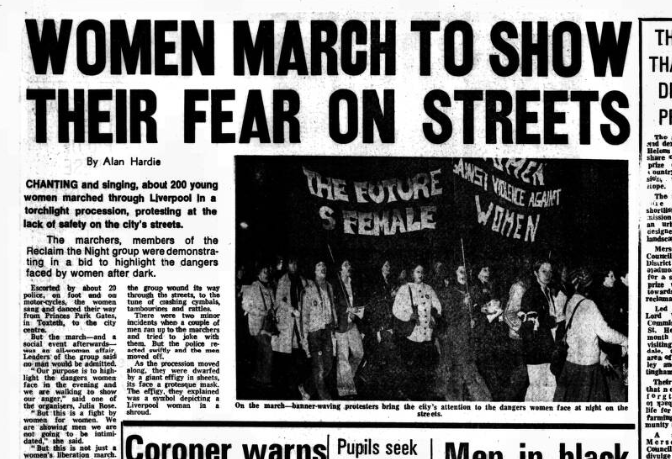
Women’s campaign against male violence

Trouble in toytown

When the Meccano factory suddenly closed down in 1979, workers fought back by occupying the premises.

How the Campaign for Homosexual Equality brought gay Liverpool out of the shadows

Despite relaxation of the law against homosexuality in 1967, gay people faced a continuing struggle for social acceptance during the 1970s.

The ghost cinemas of Liverpool

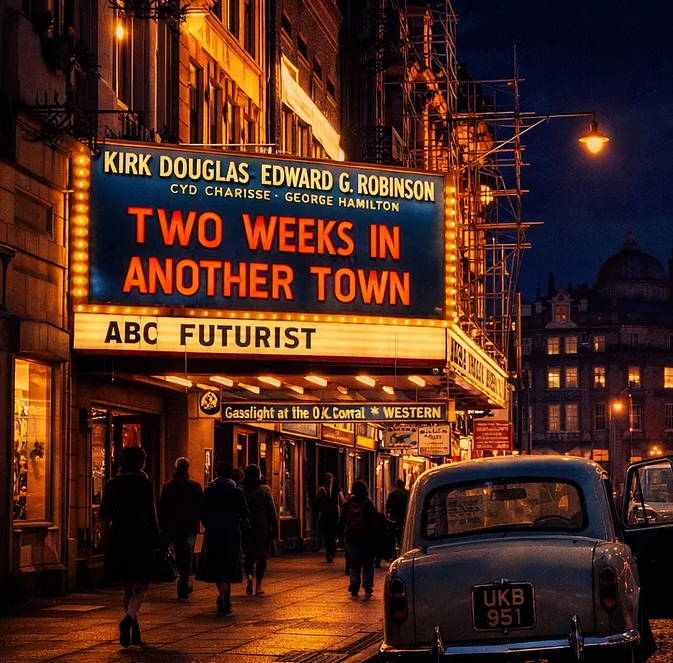
With the closure of cinemas Liverpool didn’t just lose buildings. It lost communal dreaming. Cinemas were places where you sat alongside strangers and felt the same fear, laughter, romance, and hope. In a city shaped by migration, war, poverty, and labour, cinemas offered shared narratives that crossed boundaries.

Creating jobs for the jobless

The Job Creation Programme was one of several government initiatives in the 1970s aimed at reducing unemployment, especially among school leavers. Local authorities, businesses and voluntary organisations were all urged to sponsor employment projects, with the government covering wages and other costs from a £75m fund. But what did it achieve?

The privatisation of intelligence gathering

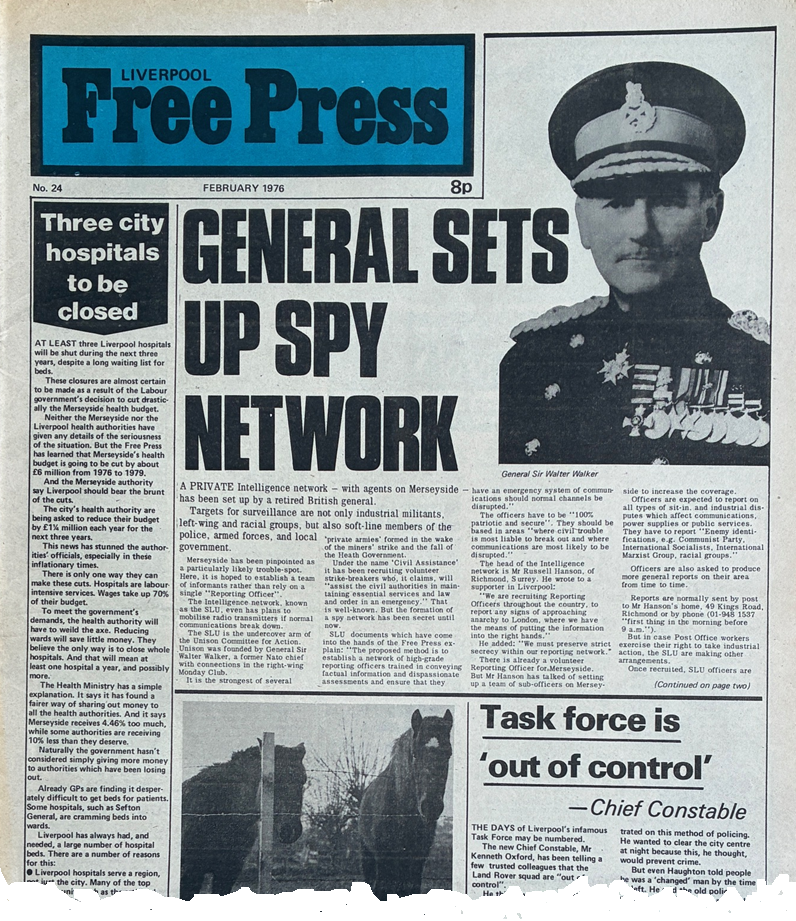
In the political and industrial turmoil of the 1970s, left-wing militants  –  especially among the trade unions  –  were treated as a threat to national security. Monitoring their activity was a task officially assigned to the police Special Branch but the police faced competition in the form of unofficial intelligence networks run by shadowy right-wing organisations. This article looks at the controversy generated by two of them: the Economic League and the Unison Committee for Action.

Rehousing Liverpool (1): From slum clearance to rehabilitation

Slum clearance in the 1960s and 1970s separated people from friends and neighbours they had known for years. Tens of thousands were “decanted” to new estates on the edges of Liverpool. But demolition and displacement weren’t the only options and in Toxteth the Shelter Neighbourhood Action Project initiated a new approach.

Rehousing Liverpool (2): Grassroots initiatives

Housing cooperatives began with the idealistic goal of giving residents control over their own homes. They were voluntary organisations that focused on rehabilitating run-down terraces (and, later, building new estates) with the aid of loans and government grants. Decision-making was in the hands of co-op members rather than the council or private landlords, but the members often had no previous experience working with architects and other professionals – which led to them making some surprising choices.

Rehousing Liverpool (3): Liberal compromises

The Liberals took charge of Liverpool City Council in 1973, though without an overall majority. They abandoned the construction of new council homes in favour of new-build co-ops. Thus what had started out as a radical and marginal movement for residents’ control was watered down as the new mainstream. However, the initial success of these co-ops created a demand for more that was impossible to meet because of government spending restrictions.

Rehousing Liverpool (4): Militant and ‘bourgeois’ housing

For several years in the 1980s Liverpool city council was dominated by members of Labour’s Militant Tendency which promised to build a thousand new council homes every year. Elsewhere in the country, municipal housebuilding was almost at a standstill and the cost of Liverpool’s ambitious plans brought a confrontation with the Thatcher government.

Militant also had ideological objections to housing co-ops which it saw as a backdoor form of privatisation benefiting the bourgeoisie rather than the working class.

Fun in the dismal days of Thatcherism: the story of ‘The End’ magazine

‘The End’ magazine was produced by the young and read by the young. It talked mainly about football, music, beer and made jokes about life without a job. The End had plenty of attitude and was often outrageous. It published witty poems that didn’t always scan and letters from readers who it then insulted in print. But that didn’t matter because it gave people a laugh – and built up a cult following.

Hounded out of town: the caravan dwellers with nowhere to stay

In the 1970s gypsies and other itinerant caravan dwellers faced constant battles with the authorities due to a lack of places where they could legally camp. After eviction from one patch of waste land they would move to another, where the process to evict them would begin again.

Neighbouring local authorities engaged in a sort of ping-pong game, batting the problem of unwelcome caravans back and forth across each other’s administrative boundaries.

A drink in the most dangerous pub … and a riotous night in Kirkby

The Eagle & Child pub in Huyton had a city-wide reputation as a clearing-house for stolen goods. Fights broke out almost every night and police officers who went to take a look would be pelted with eggs and beer. Former Post & Echo journalist John Toker recalls a visit.

Photographing football – with rollickings from Bill Shankly

Stephen Shakeshaft spent four decades chronicling life on Merseyside as a photographer and later as picture editor of the Daily Post & Echo. He describes his experiences photographing football during the Shankly era – and some strange encounters with the boss himself.

Queer-bashed in James Street: the story of a Scout leader who vanished

John Gick disappeared in 1969 during a weekend visit to Liverpool from the Isle of Man. Despite extensive searches and enquiries, the police found no trace of him, alive or dead. The reason for his disappearance is still unknown but delving into the mystery opens a window on the secretive lives of men who struggled with their sexuality in the 1960s and 1970s.

Policing Liverpool: the road to the riots

When Bert Balmer took over as Acting Chief Constable of Liverpool in 1964, tackling high levels of crime in the city centre was his top priority. Determined to take drastic action, he created a special task force with a glamorous-sounding name that was sure to cause a stir in the media and  –  he hoped  –  strike fear into would-be lawbreakers. He called it the Commando Squad.

What no one foresaw was that the battle against street crime initiated by Balmer would lead over time to a breakdown in police-community relations and ultimately to the riots of 1981.

Upping the rent: a landlord’s tricks of the trade

How private landlords drove out tenants whose rents were frozen by law and replaced them with new tenants at higher rents … and how they evaded the Rent Act by pretending tenants were “buyers” or simply “users” of the property.

A pioneer in the struggle for racial justice

The name is Bond … Comrade Bond

In 1984 Sampson Bond, a 26-year-old Londoner, became head of Liverpool city council’s new Race Relations Unit following a rigged selection process. Bond was the least qualified of six applicants for the post but he got the job because his views on race relations matched those of Militant, the Trotskyist group which dominated the city council at the time and believed racial problems would be solved by the defeat of capitalism. His appointment infuriated black and anti-racism groups in the city. They refused to cooperate with him and demanded his dismissal.

The bleak council estate of Netherley was nicknamed Alcatraz because people living there often felt like prisoners. In 1976, though, a group of women took the first step towards building a sense of community – and organised a carnival. Maria O’Reilly describes how they did it and what it achieved.

Colonialism in the classroom: books for children in the 1970s

Amid concern that Liverpool’s schools were not preparing youngsters for life in a multi-racial society, the Community Relations Council carried out a study of racist attitudes in books written for children.

The NHS watchdogs that were allowed to bark but not bite

In 1974 the government established Community Health Councils throughout the country to monitor NHS performance and represent the views of patients and the public. In Liverpool, Sylvia Hikins chaired one of them for nine years, but her hopes of improving health services were constantly battered by spending cuts and closures.

Scotland Road Free School: a devastating report from government inspectors
A highly confidential report by education inspectors in 1973 gave a blistering account of the Free School in its death throes, Liverpool People’s History has discovered.

News from Nowhere: the story of a radical bookshop 
An insider’s view of the shop’s history – by Mandy Vere who worked there for 45 years.

The early years of Women’s Liberation
How the movement evolved on Merseyside in the 1970s and 1980s.

The Bridewell and the Boys from the Blackstuff
Much of Alan Bleasdale’s acclaimed TV drama was filmed at a former police station on Prescot Street.

Police, drugs and ‘agriculture’ in Toxteth
In 1971 there were two notable court cases where black men accused of possessing cannabis were acquitted after claiming police had planted it.

The Liverpool Scene – and beyond
In the 1970s and 1980s Merseyside poets dared to be popular – challenging the idea poems can’t be ʽgood’ unless they are elitist.

International Garden Festival: a treat for ʽcomfortable Britain’
The Garden Festival in 1984 attracted more than three million visitors and helped to regenerate Liverpool. But what benefit did the visitors get from it?

Arthur Dooley, sculptor
The former shipyard welder who turned scrap metal into art.

Merseyside Unity Theatre
Drama and agitprop in the 1970s: an account by one of the theatre’s founders

From word games to Dial-a-Poem
How the Windows Project spread new forms of creativity among children and adults.

Concrete is beautiful: the Shankland master-plan
Graeme Shankland was a planner hired by the council. His vision for Liverpool was to tear down much of the centre and replace it with “robust and manly” new buildings encompassed by an inner motorway on stilts. His plan has since been described as “notorious” and “a nightmare”, and fortunately most of it was eventually abandoned.

The Civic Centre fiasco
In the 1960s Liverpool council embarked on a plan to bring all corporation offices under one roof in a massive city-centre building to be known as the Civic Centre. They spent years buying up properties that stood on the site but the new building became unaffordable and a public inquiry condemned its design as “oppressive” and “overpowering”.

Filming the community: Old Swan festival, 1976
Old Swan was a rather drab part of Liverpool but for a few days in 1976 it became an extraordinary place where residents held a community festival described as “an explosion of colour and noise”. In the midst of that, though, it wasn’t always clear where reality ended and the entertainment began — which in a way added to the fun.

Radio Free Liverpool
On Merseyside in the 1970s clandestine broadcasters played a cat-and-mouse game with the authorities who were seeking to confiscate their transmitters.

‘Seducing’ soldiers
Activists campaigning against Britain’s military presence in Northern Ireland faced surveillance and prosecution during the 1970s.

Liberty Hall
A club “for people who are interested in politics but don’t wish to belong to a political party”.

The battle to save Fisher Bendix
The Fisher Bendix factory in Kirkby had been built with government help to ease unemployment in the area. It wasn’t a success and in 1972 when the owners tried to shut it down workers occupied the factory in an effort to save their jobs. Three years later they began running it themselves.

Trade unions? No thanks! We’re Marks & Spencer
M&S, in its own estimation, was such a good employer that unions were unnecessary. In theory, staff were free to join one if they wished, but the company had ways of making sure that unions didn’t gain a foothold.

Where women ‘never had time to get bored’
Litttlewoods football pools once provided jobs for thousands of Liverpool women. Former employees describe what it was like to work there.

Revolting students: the Liverpool University sit-in, 1970
Students accused the university of ignoring its responsibilities by trying to isolate itself from the social and political consequences of its policy decisions. They occupied the university’s Senate House building for ten days and nights. One participant was expelled and nine others were suspended.

Democracy in the classroom: Scotland Road Free School
Come to school when you want and do what you like. An experiment in classroom democracy that didn’t work out.

GET INVOLVED
Since this is a “people’s history” website, it’s intended as a collaborative effort. Click here to find out the various ways you can take part.