In 1974 the government established local Community Health Councils (CHCs) throughout the country as part of a reorganisation of the NHS. Their role was to monitor health services and represent the views of patients and the public. By law, they had to be consulted about any “substantial” changes and could also pursue complaints made by patients. It didn’t go smoothly, though.
In the article below SYLVIA HIKINS describes the battles she faced while serving on Liverpool’s Central & Southern CHC.
* * *
Community Health Councils were designed to create a vital link between the NHS and the communities it served. Half their members were appointed by the local authority – which included local councillors – and the remainder were elected volunteers.
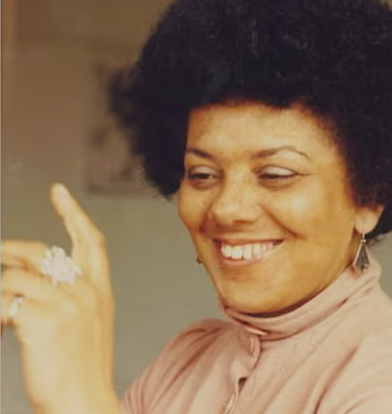
Nominated by the Co-operative Party, I was elected to the CHC for Liverpool’s Central & Southern District in 1977 and served as chair from 1981 to 1990. It was an unpaid job.
The 1980s were an especially bad time for Liverpool, with a drastic loss of jobs as factories closed down. In line with the much-publicised advice from employment minister Norman Tebbit to “get on your bike” and look for work, people were leaving the city. This had severe implications for the NHS which was funded according to population levels – and a falling population meant less money, regardless of the need.
As a result of that, from the moment I became CHC chair, I found myself in an intense fight to retain existing levels of health care services. I have always believed unity and solidarity promotes people power – and my role as CHC chair legitimised involvement in collective action. Jenni Murray, presenter of Woman’s Hour on BBC Radio 4, described Liverpool’s Central & Southern District CHC as “the most radical CHC in the country”. I was very proud of that.
We were based in a double-fronted shop on Whitechapel, bang in the centre of the city. I made sure that all information given to the CHC was available for both organisations and individuals to see, take in, respond to. Our opening hours were aligned to local retailers. Everyone was welcome. No secrets.
Even before the proposed cuts in services, the NHS was stretched. For example, there was a six-to-eight week waiting list for drug dependency treatment in Liverpool – a direct result of cash limits imposed by the very same (Thatcher) government that said there would be no holds barred in “stamping out addiction”.
The press, BBC Radio Merseyside and Granada Reports were in constant touch with me over these issues and gave plenty of coverage, especially when we produced counter-reports and organised protests.
Marching in white coats
The Duchess ward in the Women’s Hospital closed “temporarily” on 22 December 1983, effectively removing a third of women’s hospital beds along with an infertility clinic. The Area Health Authority justified this on the grounds that the beds were under-used even though 670 women were on the waiting list needing treatment.
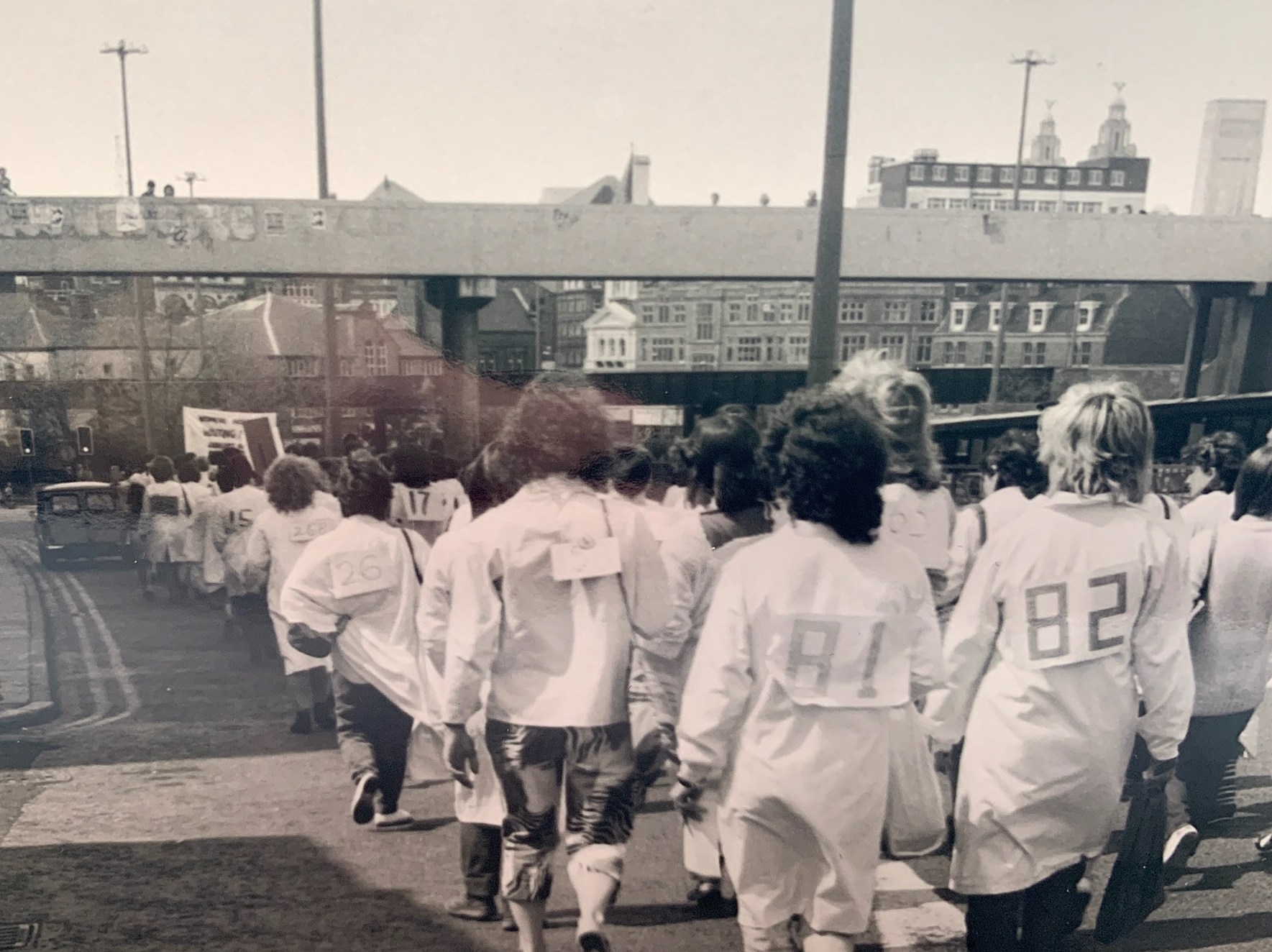
Collective actions taken by hospital staff and the public included petitions, pickets and a one-day strike. We organised a “Walking Waiting List”. On 12 May 1984, 670 women, each wearing a white coat bearing a number from the waiting list, walked from the Women’s Hospital through town to the CHC office on Whitechapel. It drew a lot of attention and made front page headlines in the Liverpool Daily Post and Echo, which resulted in a “temporary” re-opening of Duchess ward, but alas, did not stop its eventual closure.
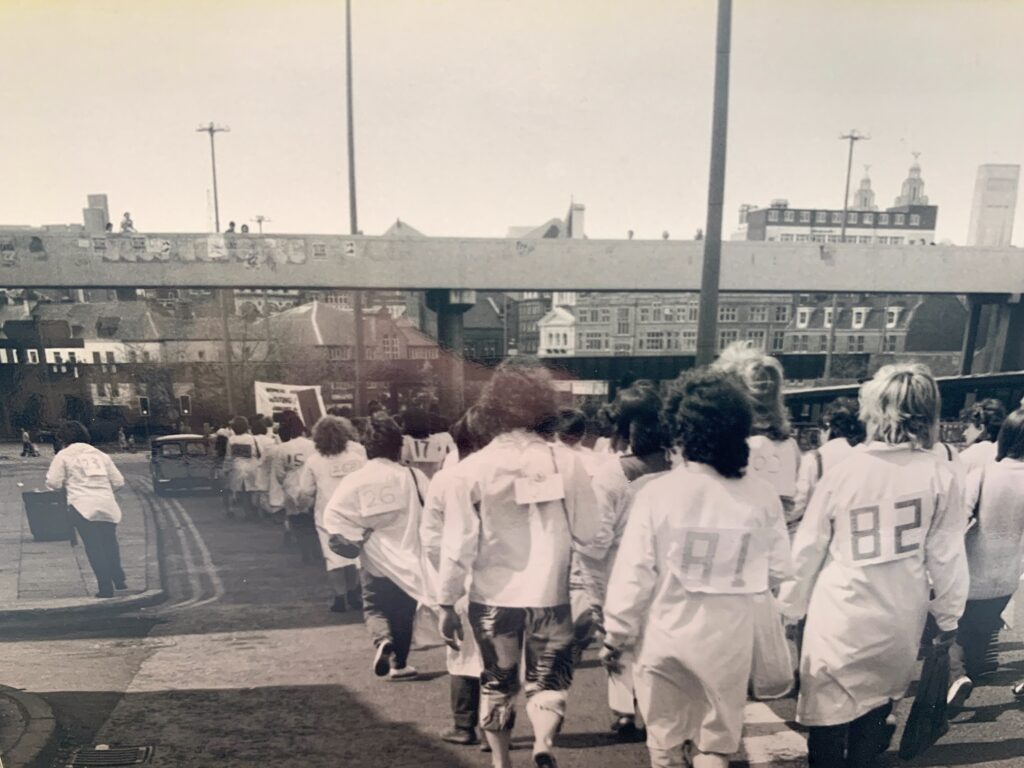
The “Walking Waiting List” protest
Speaking as a CHC chair at Area Health Authority meetings, I was constantly attacked by certain senior people in the authority for “exaggerating” and being “misleading’”.
Yet the truth was that as well as receiving information from official documents, NHS staff, including consultants, used to meet me in secret and pass on information – literally in brown paper envelopes. They knew I would never reveal my source, but it made verification of my information impossible.
Dirty washing
Often in these mainstream meetings I would be accused of “hanging out the dirty washing in public”. For example, I was contacted by a consultant at the Royal Liverpool Hospital and given a copy of a report by a government agency which had come to the hospital to check hygiene levels. The agency found that because of the built-in dumb waiter system for delivering meals to patients it was safer in some wards to eat off the floor than off the plate.
This report had been kept under wraps, mainly due to lack of funding to deal with the problem. I wrote to the senior management and made it clear that if I didn’t get a response within three weeks I would leak the report to the press. Silence. No response.
So I contacted the media and the issue became front-page news in the Daily Post and Echo – which resulted in me being verbally put down in public and accused again of hanging out the dirty washing. As an elected CHC chair I had a duty to speak out, but being a whistleblower isn’t easy. Although I always tried to be pragmatic and not create a “them and us” culture, circumstances often forced me to make a controversial stand. Within weeks the food safety issue had been dealt with and the hygiene rating was back to normal.
In the early 1980s there were growing fears of a nuclear war – including the possibility of one starting by accident. The government had ring-fenced £400,000 for Area Health Authorities to appoint officers who would take charge of healthcare in the aftermath of a nuclear attack. I was at a meeting where the Merseyside officer informed us that “Casualty Collecting Centres” would be set up in the city – to be staffed by the Red Cross and St John’s Ambulance! The stark truth was, and still is, that there is no cure for a nuclear war. The only way is prevention.
In addition to my role at the CHC, I was secretary of the Merseyside branch of the Socialist Health Association which – with help trade unions, NHS staff and the general public – got funding for a campaign using a red double-decker bus. We called it “The Last Bus”.

“The Last Bus”
To accompany the Last Bus I wrote a spoof front page of the Liverpool Daily Post, which I re-named “The Last Post”. Under a headline saying “Nuclear Bombs Fall on Britain”, it informed readers that this was the result of computer errors that mistakenly persuaded both East and West leaders to push the button. (Ronald Reagan later revealed that more than once this almost happened).
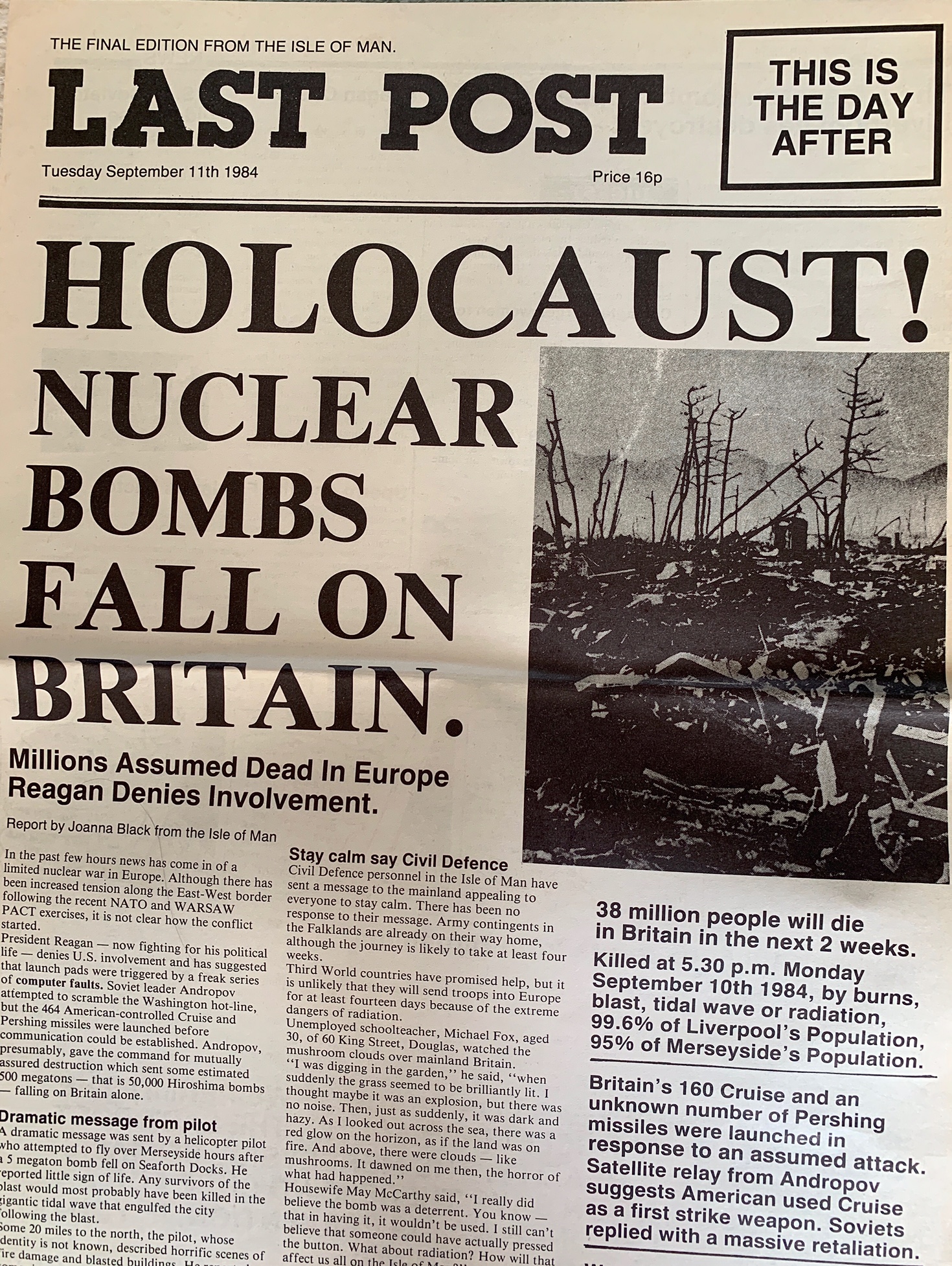
The spoof front page
Our first journey with the Last Bus was to the Dingle, where, parked by the Florence Institute, we handed out more than 2,000 copies of the spoof newspaper to local people. The real Liverpool Daily Post and Echo covered the event with a headline saying “Hold the Front Page”.
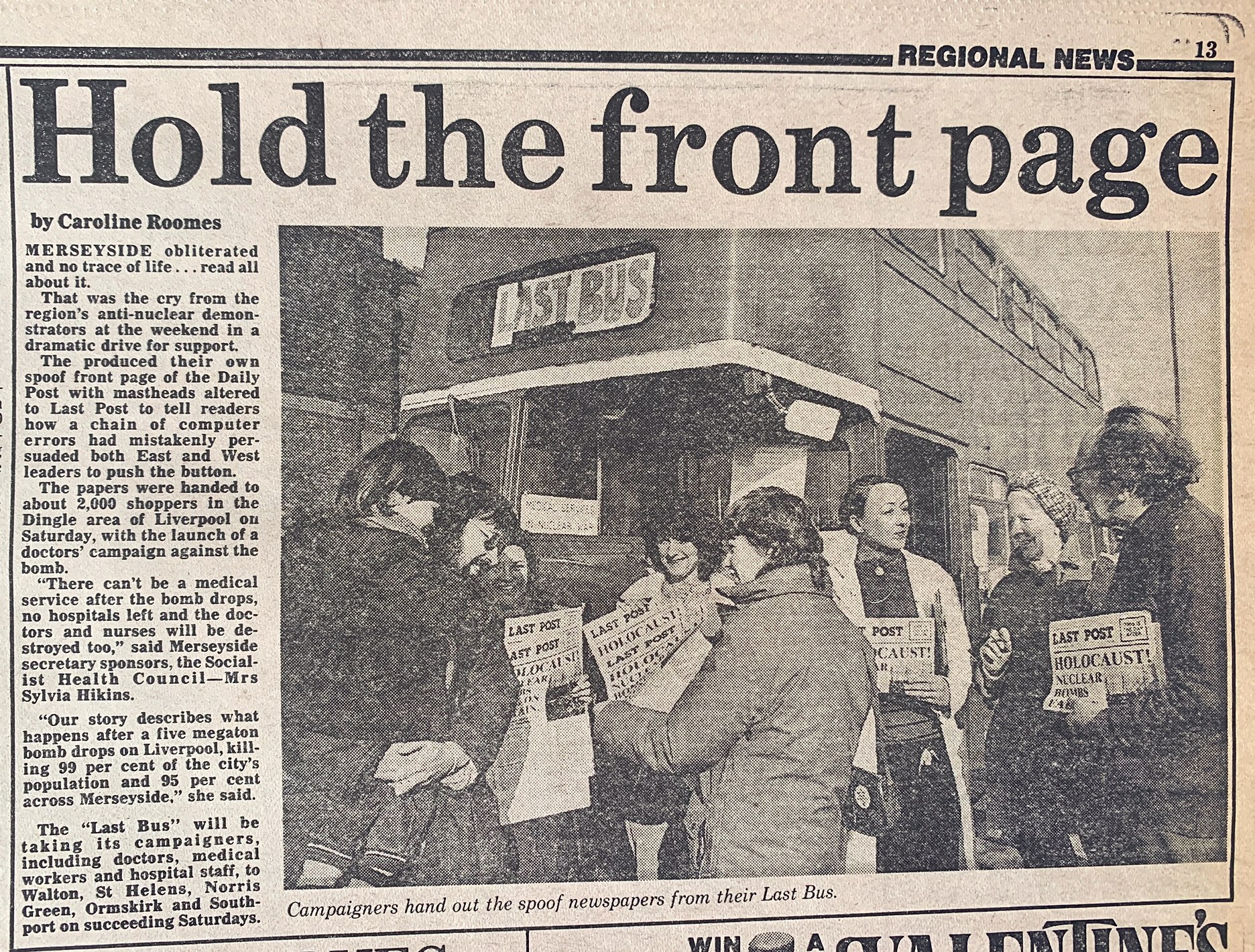
The Liverpool Daily Post’s report, 30 January 1984
In the months that followed, we took the bus all over Merseyside – St Helens, Ormskirk, Southport – on successive Saturdays, from which our campaigners distributed thousands of copies of The Last Post.
The CHCs were involved in many contentious issues: the cervical smear scandal where results had been incorrectly categorised, plus hospital amalgamations and closures like Myrtle Street Children’s Hospital. The CHC produced a paper outlining future uses of the building that focused on the needs of the local community. We also organised peaceful protests outside buildings where meetings making crucial decisions were taking place, and it was not unusual to be greeted by a large line-up of police with dogs.
Forty years later I met a key NHS manager involved at the time. He told me that secretly many of his colleagues admired what the CHC was trying to do, but in their senior positions were unable to speak out. In other words, I could say things publicly that NHS workers couldn’t. But in reality, although CHCs officially represented patients and had to be consulted on changes to services, they had a voice but no vote – the ability to bark but not to bite.
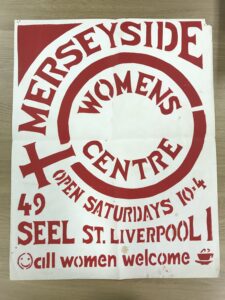
I tried to use alternative ways of communication. As CHC chair, I was accepted as a member of the Liverpool City Council Social Services Committee where the need to address issues such as poverty, housing, education, unemployment, inequalities and their obvious links to an individual’s health and well-being was apparent. The CHC supported setting up working groups that focused on health such as well-man and well-woman clinics, WHISC (Women’s Health, Information and Support Centre), and ethnic minority issues.
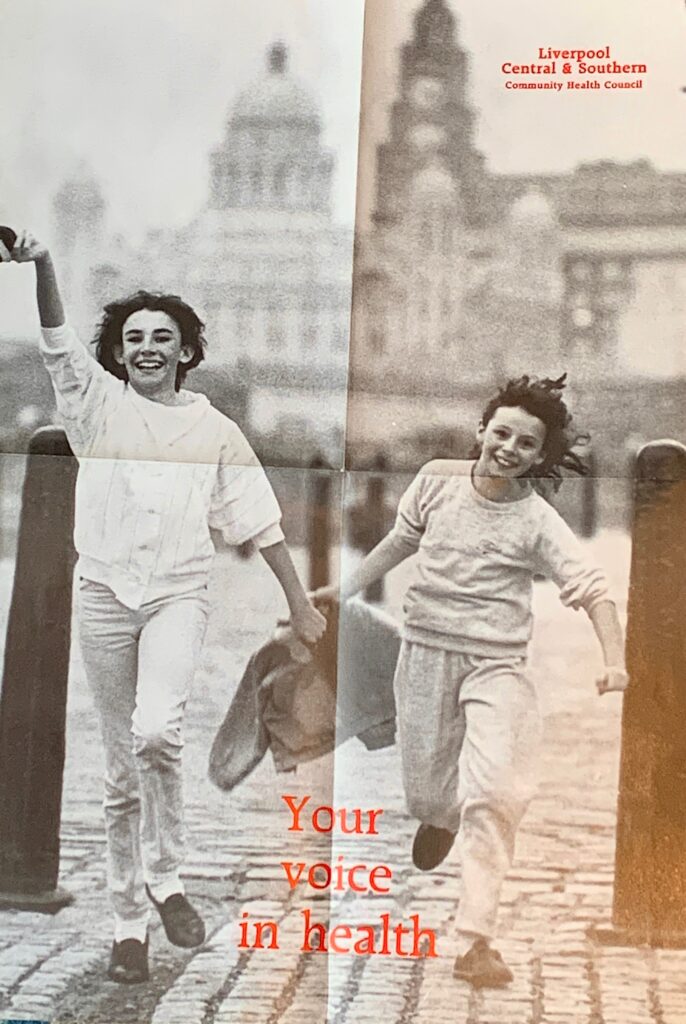
I tried to make formal reports more readable by adding relevant cartoons such as a patient in hospital asking if he could have a biscuit with his coffee when he realised the NHS was going to get a bit more money. More than once, our annual report came with written information on one side and a photo on the other, creating a big poster that could be put up on the wall.
We also both promoted and engaged in Health Fairs that took place in health and community centres, or downtown at the Quaker Meeting House. At a time of high unemployment, some were called UB40 Fairs – a reference to Unemployment Benefit Form 40, the registration card issued by the government to those on unemployment benefit. As well as focusing on health, these fairs examined unemployment, educational opportunity, and how from birth, people from different layers of society would either benefit or suffer.
I set up a “Birth Box”. You dipped your hand in and pulled out a piece of paper that told you your health prospects and likely longevity – based on whatever gender and social/economic background had been randomly assigned to you. We were trying to counteract the Inverse Care Syndrome which in effect meant that those in most need got the least. Raising awareness, as well as offering help and support, was an important aspect of the CHC role.
Margaret Thatcher had famously declared that there’s no such thing as society, and her government played down the effect of social conditions on people’s health, preferring instead to emphasise personal responsibility. When I challenged them on that at a conference in Birmingham, Edwina Currie (a junior health minister at the time) responded by waving an apple at me! An apple a day? It would be wonderful if keeping the doctor away was that simple.
In reality, I spent a vast amount of my years as CHC chair fighting cuts and closures rather than helping to build a health service based on the actual needs of local communities. In the time that I was chair, hundreds of local people came to the Liverpool CHCs for help, as well as local organisations seeking CHC support.
One example was the Greenbank Project which did outstanding work with and for people who had disabilities but faced a reduction in city council funding that put its future in jeopardy. Armed with all kinds of powerful information, and along with other voices, I used my position to speak personally to many councillors plus the leader, John Hamilton, and funding was sustained.
Sometimes local issues took me beyond my local boundaries. I found myself standing with an MP on the doorstep of 10 Downing Street delivering a petition with more than 10,000 individually collected Scouse signatures demanding a long overdue health centre in Speke. It worked!
Rose-tinted spectacles
At a national CHC conference in London, Michael Heseltine, then a senior member of the government, defended cuts in the NHS, pursuing the line I had heard many times before: that it was simply a removal of the fat underbelly. When his speech ended, I went up on stage – uninvited – and publicly presented him with a gift from the people of Liverpool. Smiling, he graciously accepted this, opened the package, and found I had given him a pair of rose-tinted spectacles purchased from an optician on Tottenham Court Road. I told him straight that was how most people in Liverpool regarded his view of what was happening in the NHS. Laughter filled the hall. The conference gave me a big round of applause and the incident found its way on to the pages of The Guardian.
In 2003, as part of the NHS Plan 2000, CHCs were abolished. Unlike other proposals in the plan, there had been no genuine explanation as to why this should happen. The decision was a controversial one. The so-called patient advocacy and liaison service outlined in the Bill before parliament lacked independence and provision for NHS scrutiny.
The Local Government Association (LGA) argued that CHC’s should be strengthened, not abolished, so that they could more easily become the voice of patient and user while local authorities could scrutinise the overall service. CHC’s were far from perfect, but they operated independently, had to be consulted, sought the views of other organisations and spoke out, but were also totally supportive of a properly-funded National Health Service based on clinical need, not the ability to pay.
No way, said the powers that be. And that was the end of my time at the CHC.








0 Comments