In the political and industrial turmoil of the 1970s, left-wing militants – especially among the trade unions – were treated as a threat to national security. Monitoring their activity was a task officially assigned to the police Special Branch but the police faced competition in the form of unofficial intelligence networks run by shadowy right-wing organisations.
This article looks at the controversy generated by two of them: the Economic League and the Unison Committee for Action.
* * *
In Liverpool, three Special Branch members worked full-time compiling information about Communists and various other leftists. Undercover officers regularly attended open-air meetings of striking workers and to avoid arousing suspicion would always vote with the militants when a show of hands was called.
“A full report of the meeting and the union’s intentions were sent by train each evening to the Security Service,” the Liverpool City Police website says.
While some people worried about this surveillance there were others – right-wing figures in the political establishment, retired military officers and “free enterprise” campaigners – who thought the police weren’t doing enough and in a belief that independent action could rectify the situation they set up their own private intelligence-gathering operations.
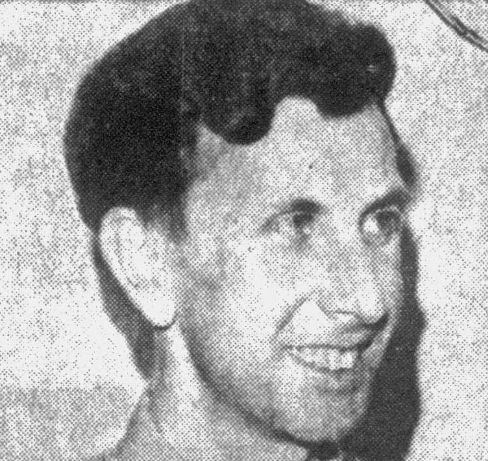
One of the oldest was the Economic League, founded in 1919 by Sir Reginald “Blinker” Hall, the Conservative MP for Liverpool West Derby, with backing from a group of industrialists. Sir Reginald had been head of naval intelligence during the First World War and was credited with significant developments in codebreaking.
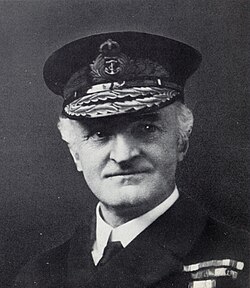
Admiral Sir Reginald “Blinker” Hall
The Economic League (originally known as “National Propaganda”) was active on Merseyside and in the 1970s had a small black van with its name in white lettering, seen on occasions in the vicinity of trade union protests.
For large-scale employers, subscribing to the Economic League was a cost-effective (and tax-deductible) way of weeding out troublemakers among job applicants.
Subscribers received advice on countering subversion among the workforce and – far more importantly – gained access to a secret employment blacklist.
“They give us pretty good value,” the personnel director of the Shell oil company told the Guardian in 1978. “We are interested in identifying overt opponents of the system to which we are committed. The last thing we want to do is have political subversives on our payroll or on sites in which we have an interest.”
Within the Labour movement there were differing opinions about the League’s effectiveness. In Spies at Work, a history of the League, Mike Hughes writes:
“Many trade unionists and Labour politicians dismissed it as the last refuge of ‘Colonel Blimp’ or a lobby for an outmoded economic idea. Others saw it as a useful, if unsavoury, ally in their own battle against the Communist Party, and the radical left in general, in the Labour movement.
“Ironically the attitude of the revolutionary left themselves to the League was ambivalent since it did at least seem to take them as seriously as they took themselves.”
For years, the League denied having any blacklist, though various media investigations confirmed its existence.
The list contained tens of thousands of names and such was its secrecy that new subscribers were not told about it in writing: they were informed verbally that it was available to be consulted. To avoid giving their name over the telephone, companies were assigned a secret code number to cite when making enquiries about potential employees.
In 1978 workers at a firm running a chain of cemeteries and crematoriums found a confidential memo describing how to check for names on the blacklist:
“Before engaging staff in future, a call should be made to 01–681–7346, code number 555, and they will require the full names, the area of living, date of birth and National Insurance number of the proposed employee. You give him the code number, you do not give the company’s name or mention it. If there is the slightest suggestion of any information held against the proposed employee from this source you do not engage same.” [Italics added]
Further media investigations, mainly in the 1980s, revealed that subscribers who checked the blacklist were making employment decisions based on information that was often wrong. The list had been compiled from sources of varying reliability, much of it amounting to suspicion or hearsay. Many of the one-line entries included the letters “CP”, indicating membership of the Communist Party, but others simply gave an occupation – joiner, docker, scientist, labourer, etc – with no mention of a political affiliation or anything to show why they were on the list.
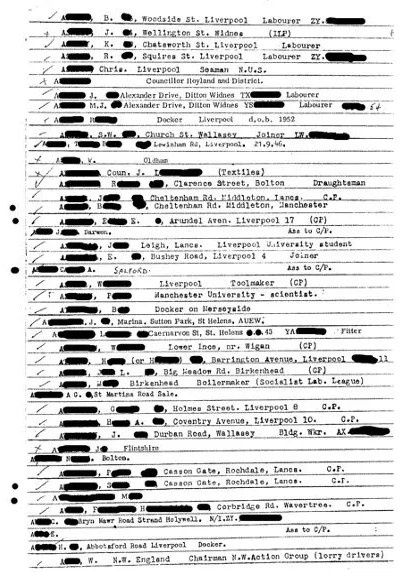
A redacted sample of names on the blacklist
In 1987 Granada TV’s “World in Action” secretly filmed a League official describing how he had urged a company not to employ a man who happened to have the same surname as someone on the list:
“We said, well look, you know, erm, by all means take the guy on if you want, but if it was me I would be a little worried about it because you are risking other people’s jobs. But who do you risk? Do you risk ninety people, or a hundred people or even thousands of people, or one job?”
This was one of the most alarming features of the list. It was being used to raise doubts about job applicants for no good reason (other than the inadequacy of the League’s information). Having planted a question mark, the League was then advising prospective employers to play safe and turn applicants down.
Bad publicity in the media led to a fall in subscriptions, compounded in 1990 when the Commons Select Committee on Employment interviewed the League about its blacklist. The organisation was eventually wound up in 1994. The Guardian later reported: “It had 40 current Labour MPs on its files, including the chancellor, Gordon Brown, and prominent trade unionists, as well as journalists and thousands of shopfloor workers.”
Plots, coups and expectations of an insurrection
In the highly-charged political atmosphere of the 1970s there was much talk of plots and conspiracies, along with reports that shadowy forces were trying to oust prime minister Harold Wilson from power in the belief that he was a Soviet agent.
In June 1974 – shortly after Wilson had been re-elected – tanks and armoured cars sealed off Heathrow airport, troops with machineguns took up defensive positions and people travelling to the airport were stopped at checkpoints and questioned by armed men (see photos).
There were fears at the time of an attack by Arab terrorists, though there doesn’t appear to have been a specific threat. Officials presented the action at Heathrow as a show of Britain’s preparedness, aimed at reassuring the public. Many people were alarmed, though – including Wilson, who had not been told about it in advance. Some suspected the events at Heathrow were a rehearsal for a coup and newspaper articles openly discussed whether such a coup would be likely to succeed in Britain.
Meanwhile, right-wing elements were predicting an insurrection and some were forming “private armies” of loyal citizens to assist the authorities in restoring order.
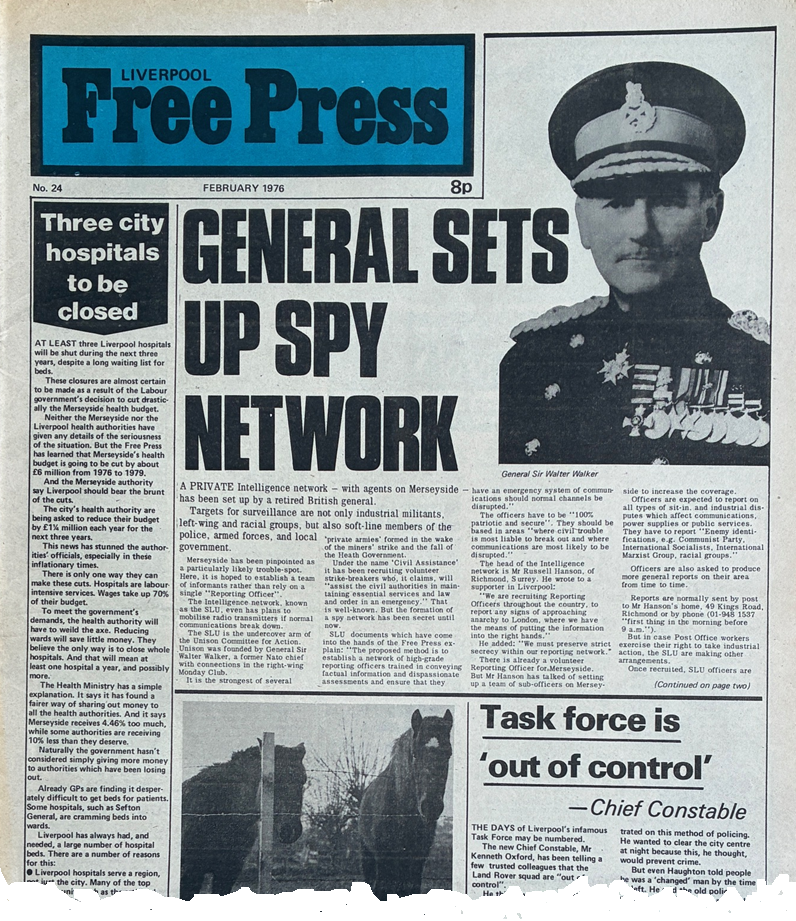
The most prominent of these was the Unison Committee for Action founded by retired general Sir Walter Walker, a former Commander of the British Army of the Rhine and, until 1972, Nato’s Commander-in-Chief for Northern Europe.
Walker believed Britain needed “a strong leader” and thought Enoch Powell might be the man — a view that may have been coloured by his three decades of military service in the Far East. Following his death in 2001, one obituary described him as “a specialist in confronting enemies and crushing subversion and revolt in such places as Burma, Borneo and Malaya” who had “strayed out of his depth when marching into the jungle of domestic politics”.
Unison was chaired by retired vice-admiral Sir Ian Hogg, a former Deputy Chief of the Defence Staff, and its secretary was George Young, a former deputy director of the Secret Intelligence Service (MI6) who later become a director of bankers Klein-wort Benson and president of Nuclear Fuel Finance (South Africa) Ltd.
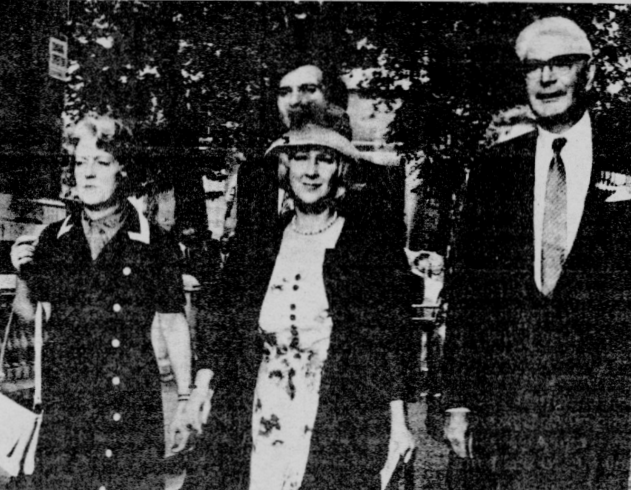
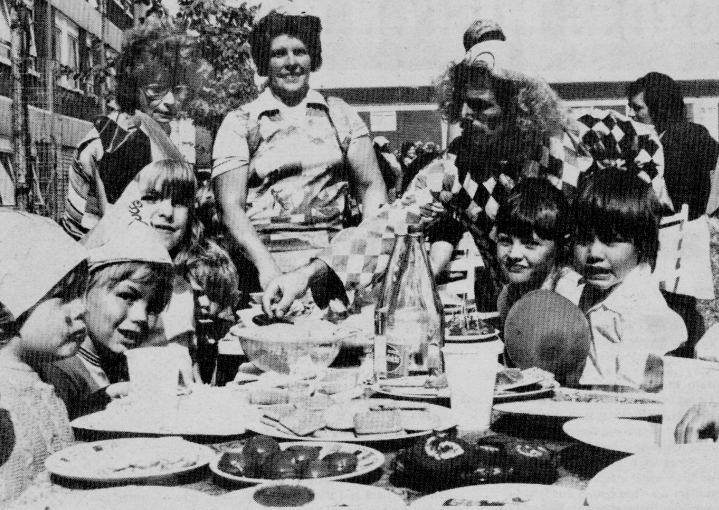
George Young of the Unison Committee for Action (right) protesting in Downing Street at the arrival of Kenya Asians in 1972. With him are Bee Carthew of the Powellite Association and Joy Page of the Immigration Control Association.
Under the name ‘Civil Assistance’, Unison began recruiting volunteers to “assist the civil authorities in maintaining essential services and law and order in an emergency”.
In 1976 the Liverpool Free Press reported that Unison had also begun establishing a private intelligence network known by the initials SLU with “Reporting Officers” dotted around the country. The paper’s account was based on a letter from Unison inviting a sympathiser in Liverpool to join the network.
The SLU’s Reporting Officers were told to send coded messages and other information to a residential address in Richmond-upon-Thames – preferably by post, though in the event of a postal strike amateur radio enthusiasts would be on hand to maintain communication. The organisers clearly took it seriously but the SLU, in essence, was a Dad’s Army version of intelligence-gathering.
The following is an extract from the Free Press story …
SLU documents which have come into the hands of the Free Press explain: “The proposed method is to establish a network of high-grade reporting officers trained in conveying factual information and dispassionate assessments and ensure that they have an emergency system of communications should normal channels be disrupted.”
The officers have to be “100% patriotic and secure”. They should be based in areas “where civil trouble is most liable to break out and where communications are most likely to be disrupted.”
The head of the intelligence network is Mr Russell Hanson, of Richmond, Surrey. He wrote to a supporter in Liverpool: “We are recruiting Reporting Officers throughout the country, to report any signs of approaching anarchy to London, where we have the means of putting the information into the right hands.” He added: “We must preserve strict secrecy within our reporting network.”
There is already a volunteer Reporting Officer for Merseyside. But Mr Hanson has talked of setting up a team of sub-officers on Merseyside to increase the coverage.
Officers are expected to report on all types of sit-in and industrial disputes which affect communications, power supplies or public services. They have to report “enemy identifications, e.g. Communist Party, International Socialists, International Marxist Group, racial groups.” Officers are also asked to produce more general reports on their area from time to time.
Reports are normally sent by post to Mr Hanson’s home, 49 Kings Road, Richmond or by phone (01–948 1537 “first thing in the morning before 9 a.m.”). But in case Post Office workers exercise their right to take industrial action, the SLU are making other arrangements.
Once recruited, SLU officers are introduced to an amateur radio enthusiast in their area: “If all normal postal communications are interrupted then it will be legal (the case has been studied) for emergency communications involving amateur radio operators to come into action.”
Operators must use the secret code-words, then a number. Each number represents a message. Officers have to memorise the meaning of each number. In case they forget, here is the code:
1. Occupation of factories spreading.
2. Occupations of public buildings.
3. Road blocks being set up.
4. Looting of shops.
5. Racial battles.
6. Police unable to guarantee order.
7. (followed by a list of names) indicates “the ringleaders”.
8. Public transport suspended.
9. Distribution of newspapers stopped.
10. Communications cut off between towns.
11. Firearms being used.
12. Troops intervening.
What sort of people are these would-be James Bonds? And where do they plan to get their information? General Sir Walter Walker has said much of his support comes from bankers, businessmen and barristers. And an SLU document says: “A reporting officer should have sufficient standing and access to be able to get information from police, town or district authority officials and local service commanders”.
But there will be other sources. Officers are to be given contacts in “friendly organisations” such as the Economic League and Common Cause.
It should be emphasised that the general’s spies are not only looking for reds under beds. Other targets for surveillance are the police, army and local councils. The general believes Britain is run by a bunch of “ditherers” and his agents are expected to report any signs of weakness: “What Unison may well be concerned with is the Trigger Factor which could turn a local dispute or problem into a breakdown of law and order which the local authority was unable or unwilling to bring under control, i.e. violent picketing, looting, racial clashes, panic, bloodshed. terrorist acts.”
What will Unison do with the information gathered by its spies? Organising Officer Russell Hanson, in a nicely ambiguous phrase, says it will be put “into the right hands”.
We can only speculate what that means. But it is obvious that the information is not intended simply for the government of the day. The authorities have ample resources of their own. What Unison want is to ensure that government power is exercised in a certain way. The type of people involved make it perfectly clear which way.
Perhaps SLU’s intelligence will go to sympathetic members of the Establishment. Perhaps it will be used to put pressure on the civil service, police or armed forces. Or perhaps it will be used for some form of direct action by Unison members themselves.
FURTHER INFORMATION
Liverpool City Police
An unofficial website compiled by former officers. It includes a section on the Special Branch.
Spies at Work
A book-length a history of the Economic League by Mike Hughes. It can be read online free of charge. Two separate websites by MIke Hughes (spiesatwork.org.uk) and (mike-hughes-blacklist-blog.net) also provide information and downloadable documents about the League
Walter Walker (British Army officer)
Biographical details












0 Comments