In 1983 Alison Halford achieved what no woman had done before: she became an Assistant Chief Constable in Merseyside police.
Hailing her appointment as “another first for Merseyside”, Chief Constable Kenneth Oxford told the press: “We have never been opposed to promoting women officers in Merseyside … My only misgiving is that more women don’t put themselves forward for promotion.”
Halford, previously a Chief Superintendent in the Metropolitan police, said she felt honoured to have been chosen and didn’t expect her sex to cause many problems: “The police are a very professional group of people and I think I will be treated as a fellow professional doing a job.”
One person who cast doubt on those hopes was Margaret Simey, chair of the local Police Authority. After decades as a Labour councillor and social reformer in Liverpool she knew the score and warned Halford: “I have learned that there is no pity for a woman — you can expect no privileges.”
In the event, Simey was proved right. Nine years later Halford’s police career lay in ruins. In an acrimonious legal battle she accused the police of sex discrimination and the police retaliated by accusing her of misconduct.
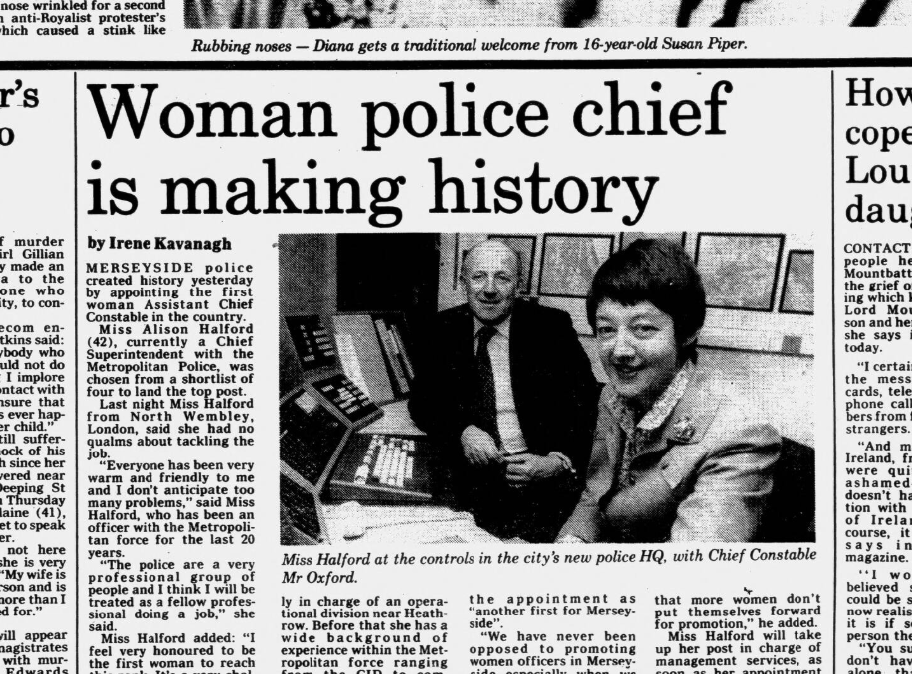
Liverpool Daily Post, 19 April 1983
Merseyside’s ‘fair cop’
The appointment of a new Assistant Chief Constable (ACC) was normally unremarkable but the arrival of a woman among the four other ACCs on Merseyside (all of them men) was a novelty. Halford attracted media attention in a way that men didn’t. The Liverpool Echo dubbed her the “fair cop” and, according to its women’s page, she had “immediately set the tongues wagging with her Mary Quant haircut and model girl proportions — 5ft 9in and as slim as a reed”.
The women’s page was also interested in how she would dress for work since there was no prescribed uniform for a woman ACC. Halford told the paper she had decided to wear a cravat rather than a tie but was still “trying to find a hat that I like that the Chief Constable will approve”. (The resulting uniform is now in the hands of Liverpool Museum.)
Another question of interest to the Echo resulting from Halford’s arrival concerned the toilets at police HQ. Oxford had his own, while his deputy and the ACCs shared male-only facilities. Councillors complained that the police were about to spend £4,500 on a new “superloo” which — according to rumour — was specifically for Halford’s benefit. The fuss died down when Oxford explained that the “superloo” was actually for himself and the other men while Halford would make use of his own former washroom.
Fear and loathing in police HQ
Life in the Canning Place police headquarters at the time was far from harmonious. Oxford was noted for having a ferocious temper and it wasn’t long before Halford witnessed one of his outbursts — directed against his own deputy, John Burrow.
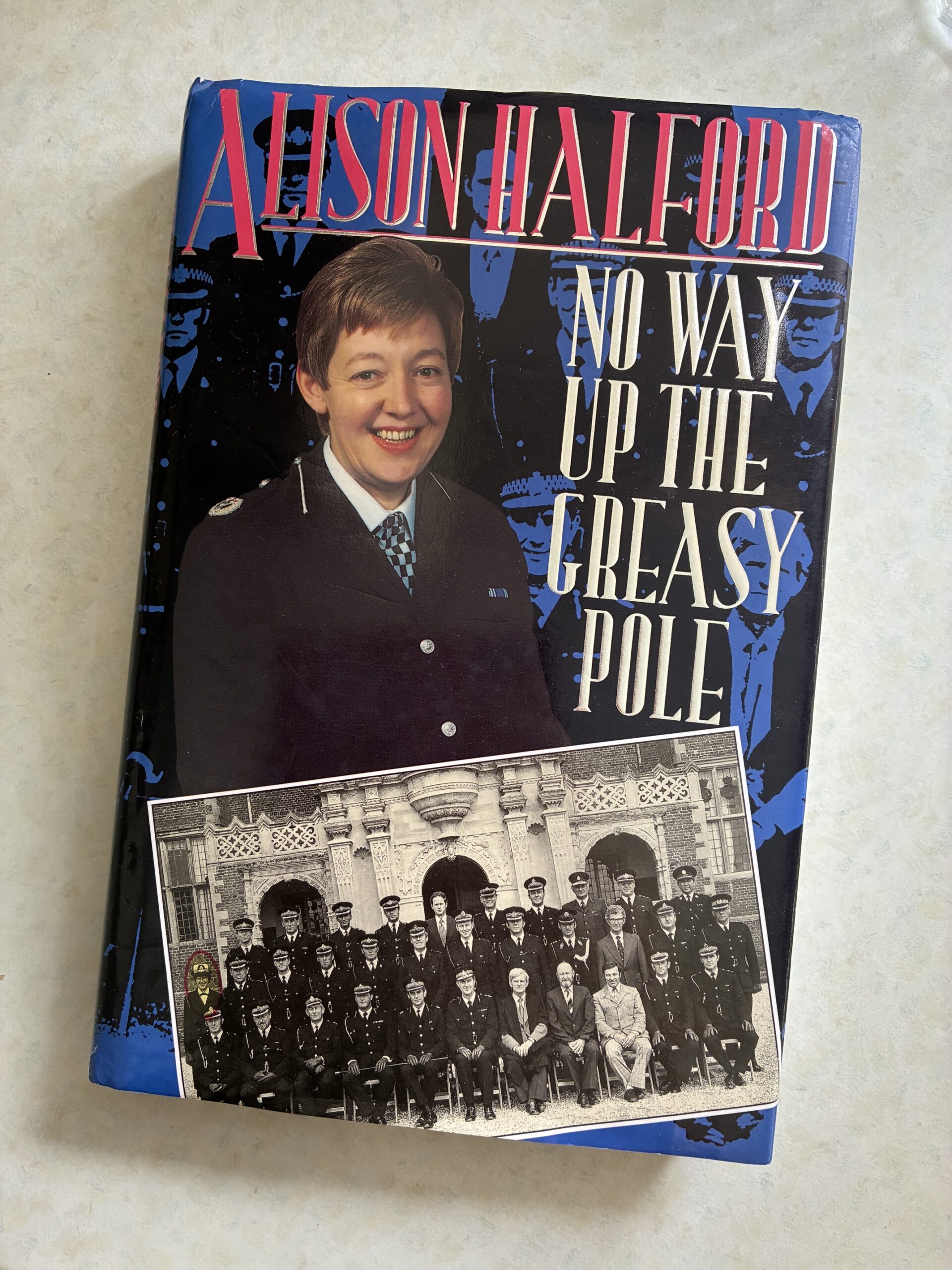
In her book, No Way Up the Greasy Pole, Halford described the scene:
“We were sitting casually in the coffee lounge one morning when the door burst open and in stormed the chief. Without any warning or preamble he launched into a humiliating tirade against poor Burrow as if he were a naughty schoolboy. I have long since forgotten what had prompted the Oxford temper but it seemed out of all proportion to the offence.” [page 41]
Her shock at Oxford’s behaviour was matched only by her surprise that Burrow “sat there meekly and took the humiliation without protest”. It also gave her a foretaste of the wrath she would shortly be experiencing herself:
“I remember one such incident just before our morning meeting over coffee. I was in my office taking evidence from a couple of civilian drivers over a sensitive union dispute. The light outside the office was on red (there were three lights; red for engaged, amber for wait a moment, and green for come in). All of a sudden Oxford stormed in and tore me off a strip in front of the two civilians. Ignoring my own conversation with the drivers he stood there shouting at me and telling me to get to the coffee lounge immediately. They were a humiliating few minutes.” [page 42]
Oxford’s temper was said to be at its worst in the mornings and one senior officer told Halford that whenever he had to meet the chief he would try to arrange it for as late in the day as possible. [41]
Seniority offered no protection against Oxford’s chastisements and on returning from meetings at the Home Office in London he would entertain staff with tales of the officials he had supposedly floored with his caustic tongue. He was especially proud of having described junior Home Office minister Douglas Hogg — to his face — as a “jumped-up little smarty boots”. [46]
Britain’s most unhealthy police force
The feuding at HQ can’t have helped morale among the lower ranks – and one possible indicator of that was absenteeism. Merseyside police was officially the most unhealthy force in Britain, with a sickness rate almost twice that of the Metropolitan police. According to the Daily Post, Merseyside police had lost the equivalent of 105,000 working days through sickness in 1985 — an average of nearly three weeks for each officer.
“It’s a hell of a problem,” Halford told the Police Authority. “We really do not know why it exists.” Obviously, police work could certainly be dangerous and stressful: “Many people had suffered grievously in the courageous exercise of their duty,” she wrote later. “But many, similarly, were merely trying it on.”
She was alarmed to discover that the Merseyside force was paying out £3.2 million a year in medical pensions:
“A classic case would go as follows. A young man signs up for 30 years but after 19 years he gets fed up with the job. He wangles a medical pension and succeeds in getting out of the force with compensation to cover the remaining 11 years he could have expected to serve.”
One officer, who had injured his back falling from a chair in the control room, had spent the equivalent of three years — out of a total of 13 years’ service — on sick leave. Another officer, pensioned off after being judged to have a 90% back disability, was spotted later working in a bar. [49, 50]
Secret contacts with Margaret Simey
Halford’s main areas of responsibility were recruitment and training, and she began reviewing current practices to see what changes were needed. As it happened, this was also a particular interest of Margaret Simey, chair of the Police Authority. They shared a belief that better training was one of the keys to better policing and Simey, eager to tap into Halford’s expertise, sought some informal briefings.
Both women held a unique position in the overwhelmingly male world of policing. While Halford was the highest-ranking female officer anywhere in Britain, Simey was the only female chair in any of the local Police Authorities — and, not surprisingly, they looked to each other for support.
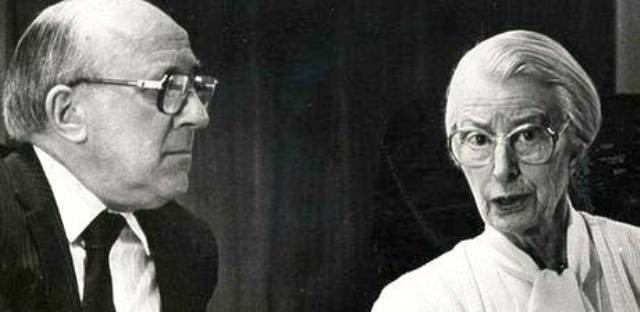
Daggers drawn: Oxford (left) with Simey
This infuriated Oxford who often feared people were plotting behind his back and viewed Simey as the plotter-in-chief. She had famously clashed with him over his handling of the 1981 riots in Toxteth — after which Oxford began referring to her as a “disingenuous cow”.
Although Oxford ordered Halford not to converse with Simey without his permission that didn’t stop them continuing their discussion surreptiously. Halford recalled:
“I would quickly pass over my written thoughts on the subject which she would equally quickly pop into her shopping bag. In this semi-clandestine way we managed to exchange useful information. But I found it rather a sad and silly way of going about things … We both had the aim of helping advance training in the police force, so why push us into a cloak and dagger routine which served no one?” [48]
Halford was convinced of the need for more women officers, and in what appeared to be a subtle hint she was photographed in the Daily Post at the swearing-in ceremony for thirteen new Special Constables — all of them women. “I could see there would come a time when people might start to talk about quotas,” she wrote later. “Better to start tooling up now for the inevitable move towards equality.” [76]
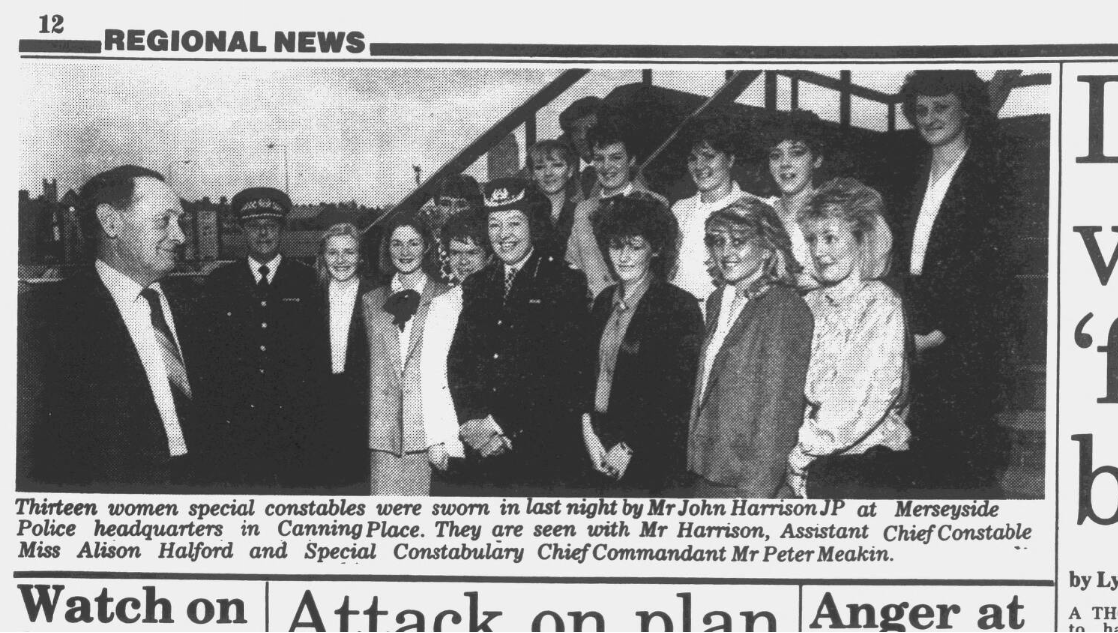
Halford at the swearing-in of 13 new female special constables. Daily Post, 23 April 1986
It wasn’t only about equality, though. Halford also believed that some tasks in policing were better performed by women. One obvious example was in rape cases where the idea that women officers should take statements from alleged victims was slowly gaining ground. However, it was resisted by some of the more traditional-minded male officers who saw no need for it.
The head of CID, Halford wrote, was old school and “like many in the force at the time convinced that men were quite capable of taking rape statements and need not be replaced by women. He constantly fought against the recruitment of women into his specialist command which he said was fine as it was.” [76]
Merseyside Police received around 6,000 job applications a year and the first step in the selection process was to send an Inspector to the applicant’s home to conduct a short interview and send back a report. Browsing through past reports, Halford noticed one apparently strong candidate who had been rejected for having a front gate that was painted mauve and looking rather shabby.
While acknowledging that the state of an applicant’s home might be a pointer to their suitability for police work, Halford saw a need to issue standardised guidelines for the Inspectors’ home visits. Her proposal met some resistance from other officers and, although she succeeded in fending it off, she saw that as part of an emerging trend where “I had to prove and justify myself at every turn in a way not expected of my male colleagues”. [53]
Musing over the obstructions that she faced, Halford began to wonder why she had been appointed in the first place. One possibility, she wrote, was “that I was the right person for the job with a track record on training matters which was judged of particular importance in the wake of the Toxteth riots. The other was that I was a pawn in an elaborate game of one-upmanship.” [74]
Jealousy at the top
Within the force, Oxford was often mocked for his apparent rivalry with James Anderton, the Chief Constable of Greater Manchester. Tales circulating at the time depicted Oxford as constantly trying — and failing — to keep up with Anderton. During the Toxteth riots, Oxford had suffered the indignity of receiving reinforcements from Manchester, plus the further indignity of finding they were better equipped, with more effective riot shields and purpose-made helmets. The Merseyside force had been issued with NATO tank helmets which could stop a bullet but tended to fracture when hit by the kind of weaponry used by rioters.
Oxford was said to have been especially jealous when Anderton was first to acquire a car phone. In the light of that, Halford wondered whether appointing the first woman ACC had been anything more than an attempt by Merseyside police to overtake Manchester. [74]
Speaking at a conference a few months after arriving on Merseyside, Halford made some remarks which can scarcely have endeared her to the “old school” officers. Police women, she said, were “more compassionate, better listeners and not as aggressive or provocative as their male counterparts”.
Halford attributed this to inadequate training and a lack of self-confidence but it was also deeply imbued in the culture. Starting in the late 1960s, efforts to combat street crime had focused on making large numbers of arrests rather than lowering the overall crime rate. Stop-and-search tactics had particularly angered the black community and there were plenty of documented cases where no crime had been committed, or was about to be committed, until police arrived on the scene and started behaving provocatively.
Seeking promotion
By 1987 Halford was itching for promotion. She applied for the vacant post of Deputy Chief Constable (DCC) in Manchester but wasn’t shortlisted and a similar application to Lancashire Police also failed.
Around the same time an article in the Police Review — regarded as the house journal of the police service — predicted that Britain would have its first female Chief Constable within 10 years. Halford disagreed and, without seeking Oxford’s approval, submitted an article of her own explaining why she didn’t expect it to happen.
“The inability of some very senior men to cope with a woman of comparable rank is bewildering,” she wrote — adding that on several occasions she had launched initiatives only for them to be passed to a male colleague “for no explicable reason”. The article continued:
“There appears to be a strong but covert resentment or mistrust of the competence of a woman who can get to the heart of a problem, shows creativity and innovation and manages to acquire a reputation for getting things done.
“In some ways the male seems threatened by the female of the species and thus she is given little of the support guidance or empathy which would be afforded a newly promoted male Assistant Chief Constable for example.”
Without naming names, the article was clearly describing Halford’s personal experiences and when published in October 1987 it caused a storm in the Merseyside force, upsetting high-level and rank-and-file officers alike, according to the Daily Post.
A few months later Oxford’s deputy, John Burrow — the man he had humiliated in front of colleagues in the coffee lounge — was appointed Chief Constable of Essex, thus creating a vacancy on Merseyside. Despite the furore over her Police Review article, Halford had high hopes of replacing Burrow as DCC: she was the longest-serving of Merseyside’s ACCs and the others were either too inexperienced or barred under Home Office rules requiring them to have worked for more than one police force.
Bad language on the golf course
Coinciding with Halford’s application for the job, a story seeking to discredit her surfaced in the tabloid press. The events described had actually taken place three months earlier, so the timing of their appearance in the media looked suspiciously like an attempt to sabotage her chances of promotion.
Halford had been a member of the Wirral Ladies’ Golf Club, a prestigious and long-standing institution in Bidston, but left under a cloud amid accusations of disruptive behaviour. The club had strict and often quirky rules about how members should conduct themselves and Halford unwittingly infringed several of them — including a rule that bar staff must not be addressed by their first name. On one occasion she had been asked to leave the clubhouse.
Although it was officially a women’s club and male members had no voting rights, Halford believed the men had too much influence and she infuriated them by calling for male players to be banned on Saturdays. Retired men, she said, were monopolising the course on the only day that career women like herself were available to play.
Halford also got into disputes with other players over who had priority at the tees and eventually resigned after a contretemps on the course where she had told another golfer to “Sod off!”
If a man had sworn at a fellow member of his rugby club, Halford asked herself, would this have merited more than a passing comment in the bar afterwards? Would this flagrant breach of etiquette have been damned as “conduct unbecoming of a gentleman”?
“No, it would not,” she wrote. “The very notion was absurd … The same rules did not apply to a woman. What was expected of her was not exactly clear but if she failed to conform to those expectations she soon knew about it.” [87]
Although Chief Constable Oxford dismissed the golf club story as irrelevant to Halford’s police work she strongly suspected (though without clear proof) that he was the person who had leaked it to the media.
Roadblocks to promotion
Whether or not the Police Review article and the golf club revelations had already scuppered Halford’s chances of being offered the DCC job, an unexpected move by Oxford firmly shut the door. He announced that the shortlist would be restricted to candidates who already held the rank of DCC. This automatically eliminated Halford without even an interview and the job went to James Sharples from Somerset and Avon police. [70]
With hindsight, it appears that Oxford’s manipulation of this process was more about succession planning than thwarting Halford’s ambitions. Oxford was preparing to retire and the search for a new DCC presented an opportunity to hire someone who could be groomed as his successor.
DCC Sharples was duly promoted to Chief Constable a year or so later, which resulted in the DCC post becoming vacant again. Halford applied for a second time and was shortlisted, though not appointed.
In the months that followed she applied for vacant DCC posts with the Thames Valley, Northamptonshire and Cheshire police, all without success. By then, she had been rejected for a total of nine jobs since joining the Merseyside force and suspected there was more to this than simple misfortune. Male colleagues around her were moving onwards and upwards but she appeared to be stuck.
Her rejection by Thames Valley Police looked especially odd because they had specifically invited her to apply. After making enquiries she found that the Home Office had withheld the requisite consent for her to be shortlisted. The question, though, was why. Could it have anything to do with the reference that Sharples had agreed to provide for her?
At the time of asking, she had felt her relations with the new chief were reasonably good — and certainly better than under Oxford. She recalled that Sharples had openly praised her work at a conference of chief police officers (though he had also described her as “a bit of a madam”).
A horrifying discovery
Around this time a cluster of personal computers had appeared in HQ for use by senior officers and their secretaries. The setup had been designed without much attention to security — and when Halford discovered that all users could view each other’s files it took only a few seconds to find the reference Sharples had written on her behalf.
“As I read through the pluses and the minuses I knew there and then why I had not received the magic tick from the Home Office,” Halford wrote later. Despite what Sharples had said in her favour, “the critical points were of such a nature and magnitude that no sensible police authority would seriously consider me.”
In one part of the three-page reference Sharples implied that Halford was likely to cause problems for any force that hired her:
“Unfortunately Miss H on certain issues such as Equal Opportunities has a strength of views which cause her to exercise a lack of judgment. She has become enmeshed in one or two public utterances because of her conviction and it has caused her and the force a degree of public embarrassment.” [95, 96]
Sex discrimination complaint
At this point Halford decided to make a formal complaint of sex discrimination and in June 1990 the Equal Opportunities Commission, a public body set up to help enforce the Sex Discrimination Act and other equality laws, agreed to take her case to a tribunal.
The basis of her claim was that she had been discriminated against for being a woman but the fact that she was also unmarried had led to talk about her sexuality. During preparations for the tribunal it emerged that Chief Constable Sharples and George Bundred, chair of the Police Authority at the time, had both asserted — disapprovingly — that she was a lesbian. In Bundred’s view, that meant she should never have been given a job. Meanwhile, a private note written by Sharples accused Halford of having “an improper relationship” with a woman who was a civilian member of the force:
“She has a friendship with a female member of the personnel staff who accompanies her to football matches when Miss Halford is in attendance as the ACPO representative at the ground and who has also accompanied Miss Halford to lunches in the mess which in her own right she is entitled to attend.” [117]
Despite an offer of extended leave on full pay while the discrimination case was pending, Halford opted to continue working, and a few weeks later an incident occurred which opened the door for a counter-claim by the police — accusing her of misconduct.
Drunk in a millionaire’s swimming pool
Halford was known as a heavy drinker (as were many of the male officers) and she supped her beer from a pint glass, just like the men. However, there don’t appear to have been complaints of this affecting her work — at least, not until one fateful afternoon in July 1990 when Halford get very drunk while on duty.
She had attended a buffet lunch organised by Safer City, a Wirral organisation that was seeking support from the police. Several junior officers were also present — plus Peter Johnson, the millionaire boss of Tranmere Rovers football club.
As the lunch ended, Halford offered the other officers a lift back to HQ but they had already accepted an invitation from Johnson to stop off at his home along the way. It was only meant to be a quick visit, so Halford decided to join them and they set off in Halford’s official car, following Johnson in his blue Rolls-Royce.
It was a hot afternoon and they joined other guests for refreshments around the swimming pool in Johnson’s garden. As Halford began to enjoy herself any idea of a making it a short visit soon melted away:
“As if in a dream I drank from a glass which seemed constantly full and gazed longingly at the swimming pool. How I got there I do not know but suddenly I was in the lukewarm water paddling around in my underwear.
“Far from reviving me it seemed to make me drowsier still. I came out of the pool and was out for the count … I was in a world of my own and came to only when one of the officers said, ‘Time to go, Ma’am.’ And drowsily I followed on. What had started out as a happy and relaxed day had taken a dreadful turn for the worse.” [139]
Two officers later escorted her home amid concern for her wellbeing.
Disciplinary moves
The swimming pool affair — colourfully reported in the Sunday Mirror a few weeks later —resulted in calls for disciplinary action which complicated Halford’s sex discrimination case.
Beside the swimming pool allegations, Halford was said to have sent an “extremely offensive” memo to Chief Constable Sharples and an initial investigation by the Deputy Chief Constable of Sussex Police suggested she could be guilty of “neglect of duty”, “discreditable conduct” and “falsehood”.
Based on that, Merseyside Police Authority announced that it was suspending Halford (on full pay) until all the disciplinary issues had been dealt with. At that point the Authority probably had no realistic alternative but the allegations did have the appearance of a tit-for-tat response to Halford’s discrimination claim. That view was later echoed by a High Court judge when Halford sought a judicial review. The disciplinary proceedings “had the smell of unfairness”, he said, and ruled her suspension unlawful.

Halford’s suspension was front-page news in the Daily Post
After two years of legal machinations the warring parties agreed on a settlement. Halford withdrew her discrimination claim and the police side abandoned their disciplinary action. Halford received £10,000 compensation (the maximum allowed at the time) and, at the age of 52, retired to Wales with a police pension.
That wasn’t quite the end of her legal battles, though. She believed her home and office phones had been tapped in connection with the discrimination case, and in 1997 she launched a case at the European Court of Human Rights claiming invasion of privacy.
In support of her claim, Halford pointed out that some of the information compiled by police in their disciplinary investigation could only have been obtained by listening-in to her phone calls. The government’s policy was never to confirm or deny such activities but in Halford’s case it conceded there was a “reasonable likelihood” that her office phone had been bugged, and the court awarded her £10,000.
An eventful new career in politics
After retiring from the police Halford moved to North Wales, joined the Labour party and embarked on a new career as a politician. In 1995 she was elected to Flintshire County Council and in 1999 became a member of the new National Assembly for Wales.
She stood down from the assembly in 2003 and in 2006 announced that she was joining the Conservatives because of croneyism in the Labour Party. Interestingly in the light of subsequent events, one example that particularly riled her was Peter Mandelson’s appointment as a European Commissioner. In 2008 she returned to Flintshire County Council, this time as a Conservative.
Halford’s time in politics was characteristically eventful. In 2001, while serving as a member of the Welsh National Assembly, she was cleared of assaulting a taxi driver who refused to allow her dog in his cab. The driver claimed she had responded with a “barrage of abuse” and hit him on his ear and shoulder. He told the court he had never heard anyone “string so many swear words together in such a short space of time”.
Halford conceded that she had called the driver an “arsehole” but insisted she had been trying to “talk the whole thing down” — telling the court that “in my career I have had training in dealing with confrontational situations”.
As a councillor she was investigated several times following allegations of bullying. In 2017 she was disciplined by Flintshire county council for sending “highly offensive, extremely insulting, malicious and unwarranted” emails — one of which described a junior official as “mentally challenged”. Although Halford had left the council by the time the case was heard, she was issued with a 14-month ban on standing for re-election.
It’s clear from this that Merseyside police were not the only ones who found her difficult to work with. In many ways they had treated her appallingly but her unfortunate knack of getting into quarrels complicated the picture. Despite having been trained by the police for “dealing with confrontational situations”, she doesn’t seem to have applied those principles to workplace politics. Neither, though, did many of her male colleagues – least of all her former boss, Kenneth (later Sir Kenneth) Oxford.
At last: a woman chief constable
With Halford gone, Merseyside police had a vacancy for a new Assistant Chief Constable, and they appointed another woman: Chief Superintendent Pauline Clare who, unlike Halford, insisted she had met no barriers to promotion on account of her sex. She had joined the police as a 17-year-old cadet and had held every possible rank on her way up the ladder.
After a couple of years as an ACC on Merseyside she became Deputy Chief Constable of Cheshire and, a year after that, moved to Lancashire police where she became the first woman Chief Constable in Britain.

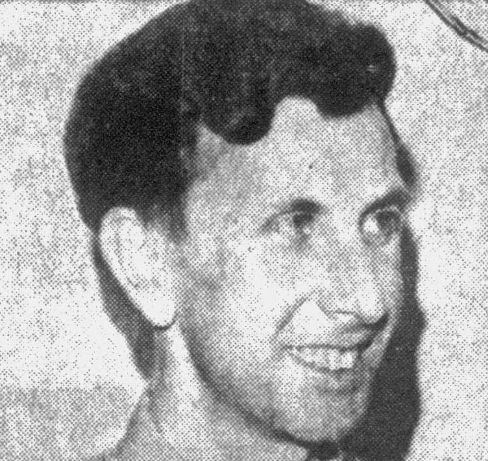
Pauline Clare had begun her police career as a 17-year-old cadet
At her first press conference in the top job Clare was given a predictable reception by the media. One of the first questions— from a national newspaper journalist — concerned her choice of perfume. “You probably wouldn’t ask a man whether he used a certain aftershave,” she said. “But I do like Chanel No 5.”
Reporters also suggested she had only been appointed for reasons of “political correctness” — to which she replied: “Talk to people who work with me and have worked with me in the past and watched me perform, and I think you will realise I got the appointment because I have the ability.”
In the event she proved the doubters wrong. Her term as Chief Constable was widely deemed a success and by the time she retired seven years later Lancashire police was rated by Her Majesty’s Inspectorate as the best performing force in England and Wales.
FURTHER INFORMATION
No Way Up the Greasy Pole
Alison Halford
Constable & Co, 1993. ISBN 10: 009472380X; ISBN 13: 9780094723801
Numbers in square brackets in the texte above indicate the relevant page in Halford’s book.
Policing Liverpool: the road to the riots
Liverpool People’s History
Last Word
BBC Radio 4 discussion of Alison Halford following her death in 2025.
Newspaper articles …
Woman police chief is making history
Irene Kavanagh, Daily Post, 19 April 1983, p3
First for Merseyside as Alison joins force
Brian Roberts, Liverpool Echo, 19 April 1983, p5
Alison, a fair cop daring to speak out
Moya Jones, Liverpool Echo, 3 June 1983, p12
Flushing out ‘superloo’ cost
Liverpool Echo, 29 June 1983, p2
Photo and caption: swearing-in of 13 women as special constables
Daily Post, 23 April 1986, p12
Mersey police in sickness probe
Peter Oldham, Daily Post, 9 January 1987, p11
It’s a Bobby’s job
Liverpool Echo, 12 October 1987, p3 (continued on p13)
Policemen cop it from Alison
Daily Post , 13 October 1987, p13
Police probe claims of ‘misconduct’ by officer
David Hope, Daily Post, 28 Sept 1990, p3
Woman police chief shock: officer in sex bias row is suspended
Susan Critchley, Daily Post, 13 Dec 1990, p1
Police chief faces D-day
John Thompson, Liverpool Echo, 13 Dec 1990, p3
Former deputy police chief wins eavesdropping case
BBC, 1997
Alison Halford obituary
Duncan Campbell, The Guardian, 14 March 2025.
BBC Last Words programme













0 Comments